5 Amazing Gadgets Under $50
5 Amazing Gadgets Under $50


I think you will agree with me when I say:
It is troublesome to find the right racing drone, especially if you are a newbie in this hobby. (I should know, I’ve been there). There are literally thousands of drones for sale everywhere and it is increasing by the minute! It could even be a disaster if you end up purchasing a heavily marketed model, but turned out to be a complete disappointment.
It should not be the case, right?
Well, what if I say, that you can find the right racing drone without a hitch? Being a racing drone enthusiast myself for 2 years I will provide you with a comprehensive guide. In this article, I will guide you on your first time buying a racing drone and ensure you end up with a model you can totally brag to your friends.

There are three types of drones, first are the camera drones, second are the toy drones and third, which is why you are here, are the FPV/Racing Drones. Let’s skip the first two choices and focus on the Racing Drones.
If you think that freestyle flying and drone racing sounds something crazy you would only see in the movies, you are absolutely right. It is an intense, fast-paced and super addictive sport. Imagine the adrenaline rush in car racing, now, multiply it by 10. That is the experience you will get in drone racing. It is unlike anything else in the world.
Drone racing is not just a hobby, it is a real sport with real competitions and very real prize money. It goes so far that the Drone Racing Association has signed a deal with ESPN. As a matter of fact, drone racing is taking the world by storm. Nobody knows where this sport will end up in the following years.
One thing is sure though, it will only become intense as technology advances. Who knows, drone racing might become a popular sport as any major sports. So if you want to experience that future, hopping into the drone racing bandwagon today is the best start.

The two drones I will show you are top rated racing drone models. Although, there are better drones on the market, we are aiming to settle for something that will enhance your flying skills, help you familiarize with common drone racing obstacles and even help you win local competitions. Try to get to know these models before you consider buying drones meant for the big league.
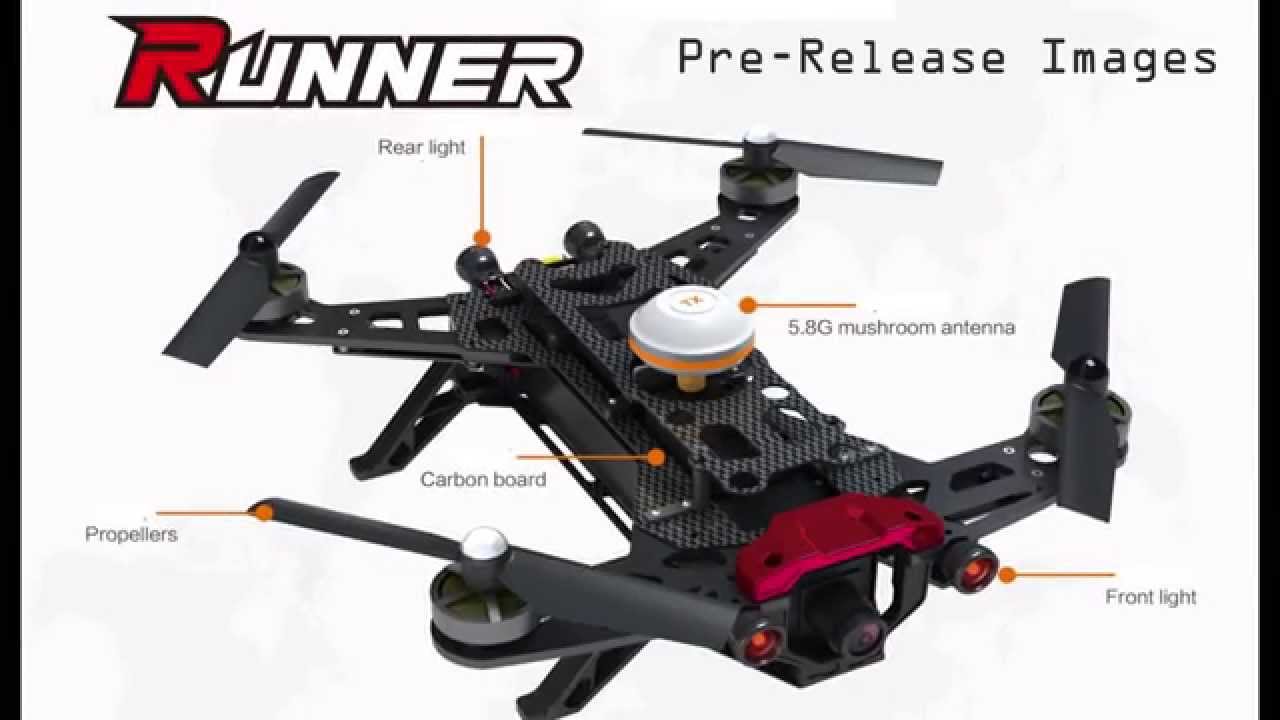
This drone is perfect for getting started with drone racing as quickly as possible. It is pre-calibrated and tested, which makes flying on a racing course easy even for first timers. The electronic speed controller is top-notch. It also comes with a damping plate that acts as an extra-protection from crashes. (Pretty convenient, right?)
Plus, the Arris drone is compatible with a wide range of HD FPV googles. So you can choose a goggle with better resolution allowing you to see better pictures of what your quadcopter is seeing up in the air.

What makes this a fine choice is its long flight time. It could stay up in the air for 14 minutes, giving you longer flying practice for up to 25mph. It can maneuver pretty well in tight spots. Even if you are flying on a racing course with lots of obstacles and sharp corners, with Walkera, you can handle it just fine. Although, design-wise this model has seen better days. But our main concern is speed and ease-of-use, this drone can be of great help to you.
Obviously, you need a fast racing drone. Usually racing drones have a top speed of 35mph. But, it can easily go over 50mph or higher by doing a few tricks. One surefire way to go faster is having powerful batteries with higher voltages (choose 14.8 instead of the traditional 11.1v).
Another way to boost your speed is cutting on your drone weight. Take off unnecessary stuff like heavy landing gear, long wires, OSDs and GPS.
There are drones that can reach up to 120mph via rate mode. This makes a drone more agile and faster, but it is incredibly difficult to control. Even skilled pilots have a hard time mastering this one.
Yes, speed and power play an important role but they are not everything there is in drone racing. There are other aspects and components you need, like an amazing drone camera, to win a competition. But for now, let us try to find a balance between these two and among other features that can help you win races.
Focus more on mastering different types of racing courses. Know different types of drones, accessories and gadgets that can power-up your drone. Later on, you will learn how to build a powerful racing drone that can take you places.
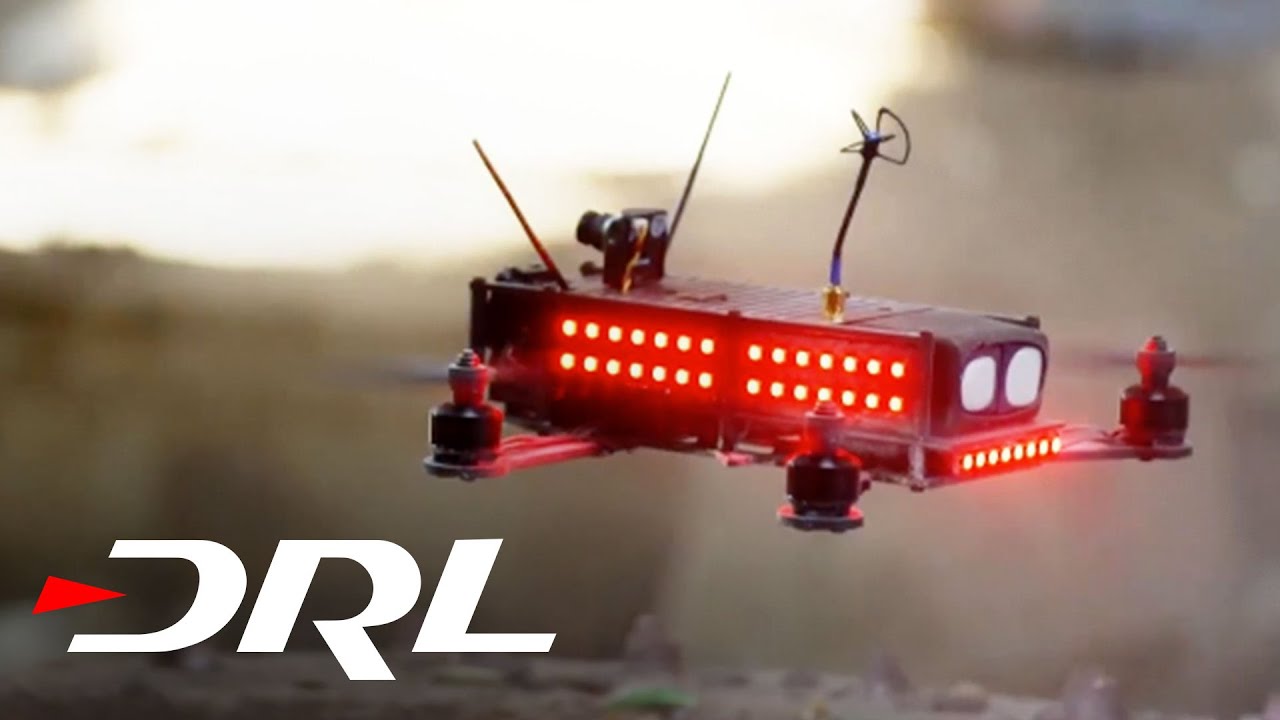
Drone racing is a sport that requires money, a lot of it. So you must prepare your pocket because going all out on drone racing can be really expensive. Normally, racing drones range from $300 to $500. But if we are going to talk about going into real racing and winning, then the cost can skyrocket to a thousand dollars or more. To win in the big racing competitions, you need to modify your drone and better parts always come with a higher price.
If you are serious in this sport, it would be to your advantage to join a drone racing community. It would be great if you become a member of the US Drone Racing Association or the Academy of Model Aeronautics.
But for now, try to join local groups or leagues in your area. You can visit parks and other locations where drone pilots often are. You can also check out for online drone racing communities, join their forums and get in touch with their message boards.
Also, even if you are only new to this hobby, try to attend drone racing. Get to know what it feels like flying a drone and master it. Of course, you should not expect to win right away, but completing a race and learning from that experience are appropriate goals.

Lastly, practice, practice, practice.
There you have it. I hope that you find this article informative and engaging. By now you probably have a solid understanding about drone racing and be able to make a wise decision in buying the right racing drone.
Happy flying!
by james

As if the makers of standalone cameras don’t have enough problems holding off smartphones, Sony has just announced a sensor that has the potential to be yet another game changer for what’s possible in mobile device photography. Its new design adds a layer of DRAM between the pixel layer and the circuit layer. That allows it to capture and readout images several times faster than current designs.
Sony announced the new chip architecture at ISSCC this week, as the latest in its long line of innovations in sensor design. The addition of on-board DRAM will help solve at least three major issues with current smartphone cameras: rolling shutter artifacts, slow-motion videos, and multi-image noise reduction artifacts. We’ll look at each in turn.
One problem with low-cost imagers, like those used in smartphones, is that they don’t have a mechanical shutter. Their images are read out one piece at a time while the sensor is still actively recording data (called a rolling shutter). That means that objects moving at high speed appear distorted, like the locomotive in this illustrative example from Sony:

While the new sensor still has a rolling shutter, its high speed readout greatly reduces artifacts
On the left, the typical 1/30s readout time smears the profile of the moving locomotive. On the right, while still technically a rolling shutter, the new chip’s 1/120s readout time greatly reduces the potential for distortion.

The new architecture adds a DRAM layer between the pixels and the circuitry
While the additional DRAM layer looks pretty simple in this block diagram, it changes the physics of the chip, and introduces additional opportunity for electrical noise. So far, the chip isn’t in production, so it isn’t possible to benchmark its real-world performance. But Sony claims it has been able to solve the new noise problems.
The DRAM also allows the sensor to capture 1000fps video at 1080p HD resolution. This makes for some very impressive super-slow-motion potential. By mixing high-frame-rate video with standard frame rate the chip also makes it possible to do some cool special effects right in a smartphone.
Less obvious, but perhaps most importantly, the 30fps readout of full-resolution 19.3MP images is perfect for the sophisticated multi-image noise reduction that’s increasingly-common in high-end smartphones. For example, Google’s HDR+ silently combines between 3 and 9 frames to create a single higher-dynamic-range, lower-noise, final output image. That process can introduce artifacts if objects in the scene, or the camera, are moving. By having the frames captured and read out more quickly, those artifacts can be further reduced.
posted by James
want to check phones click http://go.linkwi.se/z/469-2/CD21248/?

By popular demand, the only thing missing from the VR version of Resident Evil 7: Biohazard is the smell of rotting corpse. Now even that could change, thanks to the Tokyo-based startup Vaqso that is working to incorporate the sense of smell into virtual reality. In a story about VR haptics a few weeks ago, I surmised that smell was still pretty far outside the scope of VR engineering know-how. In a testament to the frenzied pace of innovation, only a short while later we now have multiple companies staking ground in this once uncharted frontier.
While Vaqso may be one of the savvier companies to tackle VR smell, it is by no means the only player. Another early contribution comes from the OhRoma device, brainchild of the erotic website CamSoda. The OhRoma attempts to bring smell to watchers of CamSoda’s streaming online cam library. And in true pornographic fashion, the OhRoma is nothing you’d want to be caught wearing in public. Resembling something from an apocalyptic biohazard outfit, the OhRoma straps around your head like a gas mask and looks as clunky as it is unseemly. It’s equipped with two sent cartridges that combine to give characters in the VR world their unique scent profile.

The Vaqso scent generator seen here attached to the bottom of a VR headset. Image Source: Vaqso
Compared with the OhRoma, Vaqso’s offering is nuanced and understated. The Vaqso scent generator is roughly the size of a large candy bar and attaches directly to an existing VR headset. It also boasts three scent cartridges instead of two, allowing for a greater range of smells. This shouldn’t be surprising, considering it was developed by one of the leading lights at a Japanese company manufacturing high-quality fragrances for restaurants. The Vaqso device will also come equipped with a small embedded fan to strengthen or diminish the smell according to your location within the VR environment. While there is no official release date as yet, a consumer-facing version of the device is slated for launch later in the year.
Taking this technology a step farther are the folks at FeelReal. FeelReal is currently a Kickstarter entity, so there’s little assurance they will ever make it to market, but its take on VR smell has to be one of the most ambitious. The FeelReal prototype VR mask attaches directly to the VR screen like the Vaqso, omitting the need for separate head attachments, and comes with 7 different scent cartridges. These were developed by professional perfumers who chose from a large number of scents to find the ones that would best fit environments found within a large number of video games and movies. These include things like the smell of fire, the ocean, and gunpowder.

The FeelReal immersion mask complete with scent generator and microheating/cooling elements. Image Source: FealReal
But what separates the FeelReal device from the rest of the pack is the addition of small microheating and microcooling elements that provide the sensation of cold and warm breezes against one’s face. This is in addition to a microionizer that emits water vapor, providing that feeling of damp mist rising off the jungle floor or a World of Warcraft ogre breathing hotly upon your face. [And I’d want that why exactly? -Ed] Couple the FeelReal mask with the HaptX exoskeleton from AxonVR, a robotic arm that one hangs from in space while exploring VR worlds, and you are looking at an experience just shy of The Matrix. If FeelReal can actually build and sell it.
THE GOOD / The Google Pixel has a fantastic camera, especially in low light. It’s elegantly designed. Google Assistant takes one of the most natural, human approaches to answering your voice.
THE BAD / The phone’s display is dim in outdoor sunlight and its camera’s Lens Blur feature is shoddy. It’s splash-resistant rather than dunkable, and it’s pricey compared to previous Google Nexus devices.
THE BOTTOM LINE / If you’re wary of Samsung or looking for a worthy iPhone alternative, the Google Pixel is the high-end Android phone to get.
Price starts:$649.99
 Mood
Mood