There were an estimated 150 glaciers in Montana’s Glacier National Park in 1910, when President Taft signed into law the bill dedicating the park. Today there are fewer than 30, and those that remain are shrinking.
As global surface temperatures rise, sometimes rapidly, glaciers like those in Glacier National Park are melting and disappearing. The park is in danger of losing its identity as well as its ice, and it may have consequences beyond losing a few photo ops.
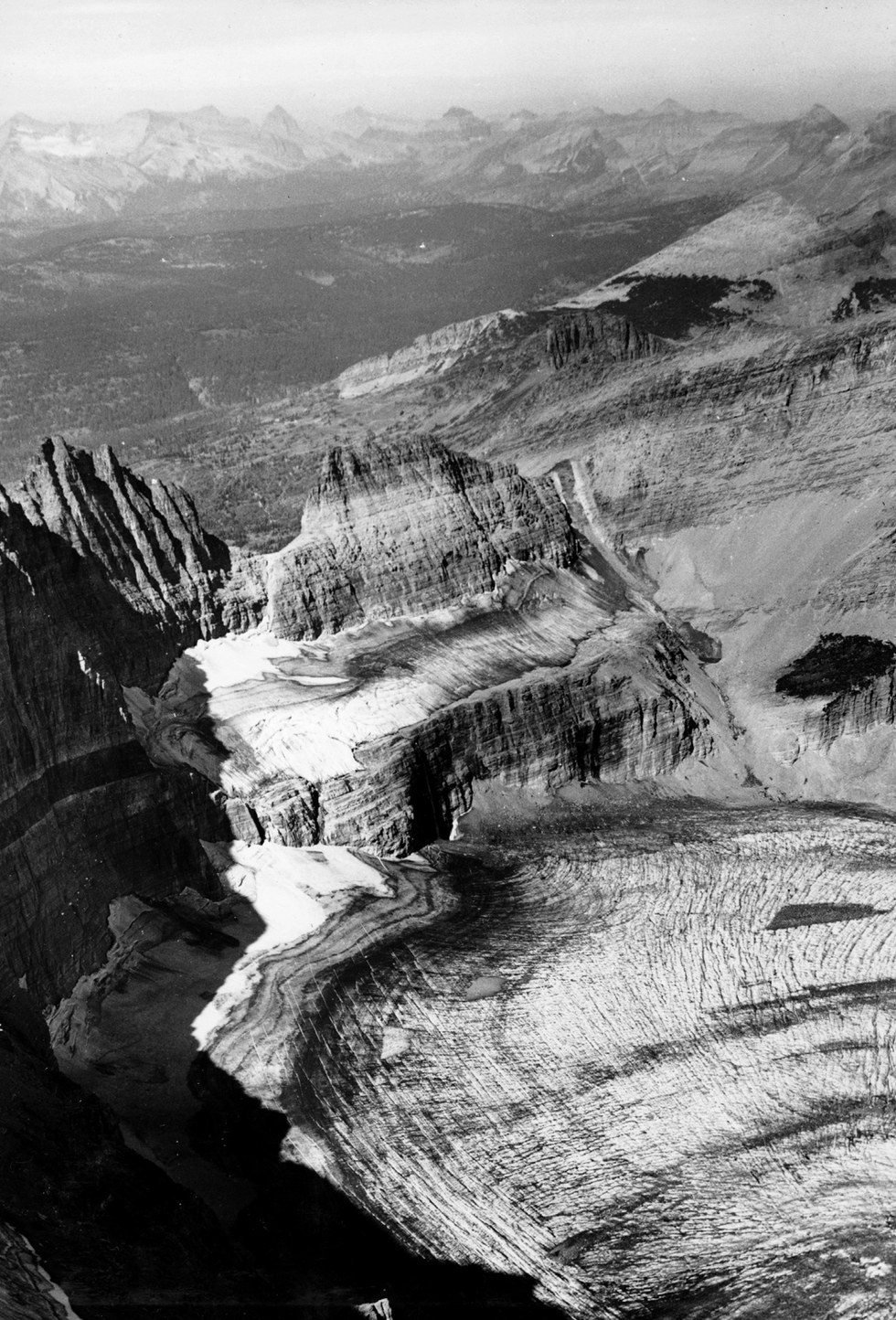
Grinnell Glacier
One of the park’s larger glaciers, Grinnell Glacier is one of the most photographed locations in the park. Between 1966 and 2005, Grinnell has lost almost 40 percent of its acreage, which once measure 710 acres. Although glaciers like those in Glacier National Park naturally move through periods of retreat and growth over decades and centuries, scientists say levels of retreat have atypically accelerated since the 1980s.
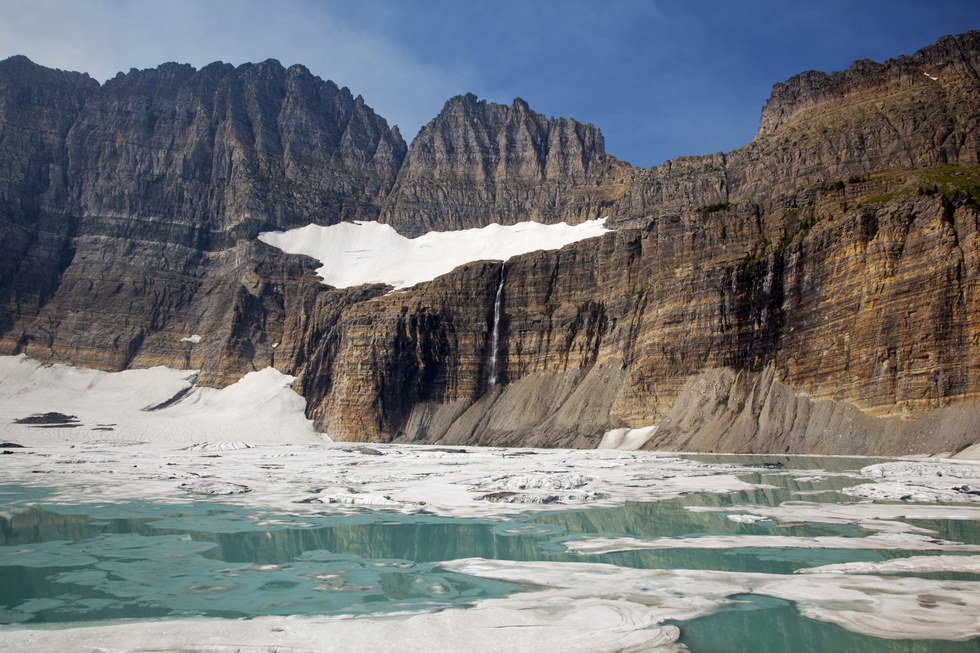
Grinnell Lake
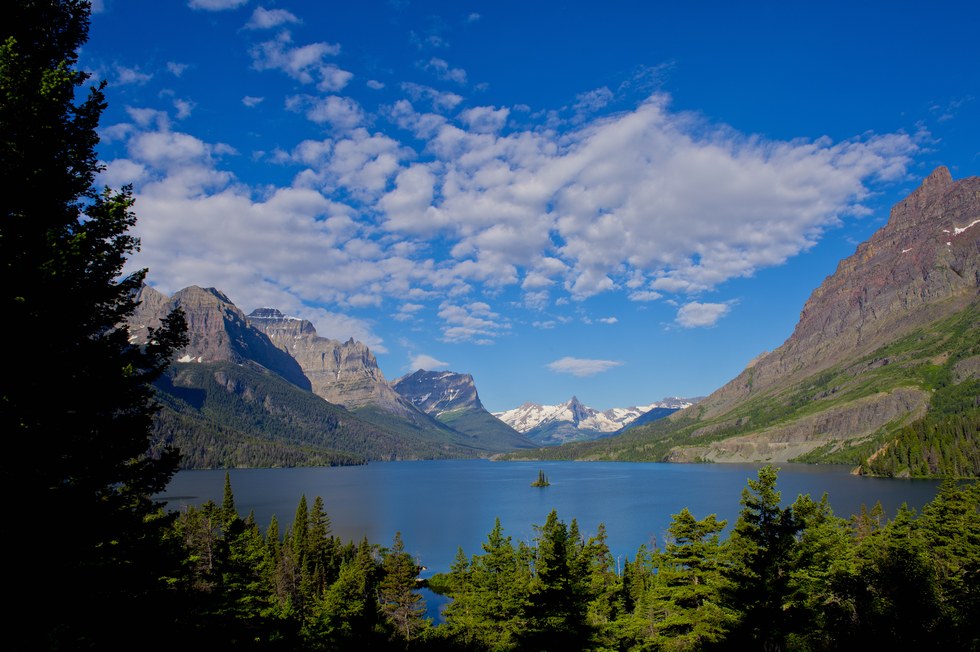
Grinnell Lake is what remains of Grinnell Glacier today, but with the ice that feeds the lake continuing to melt off, even Grinnell’s remnants are in danger.
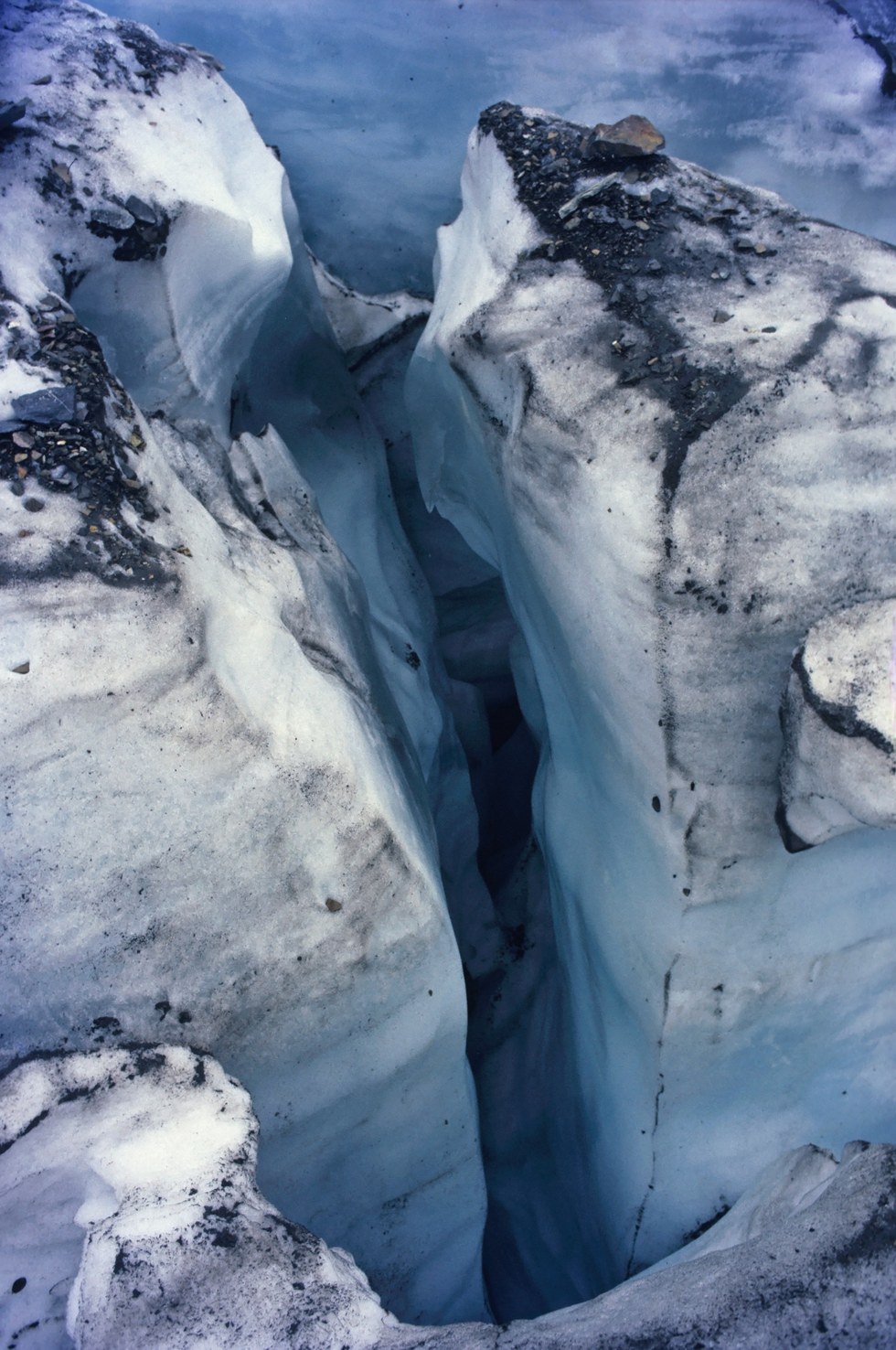
Grinnell Glacier Crevasses
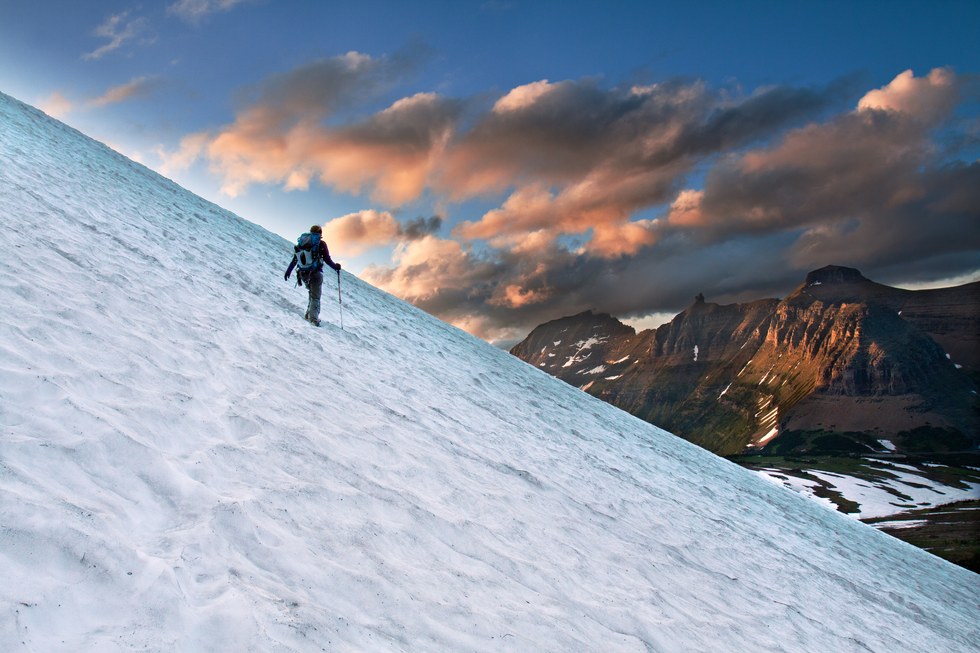
Although it can take centuries for glaciers to form, it doesn’t take very long for them to melt and retreat. As the ice begins to break down, crevasses and pools of melt-water can interact and expose more of the glacier’s surface area to air and water, causing further melting and breakup.
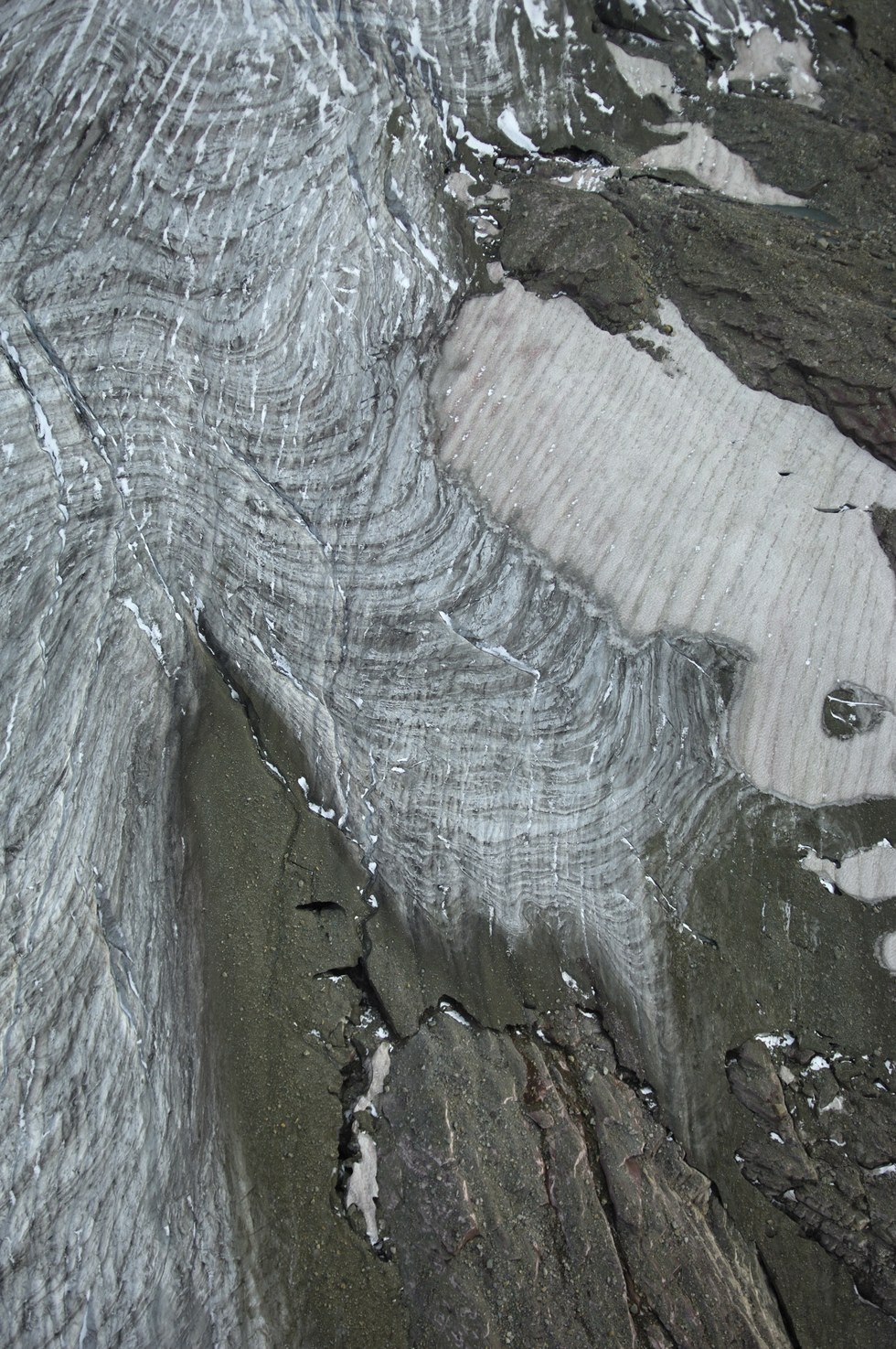
Sperry Glacier And Sea Level
Sperry Glacier, seen from above, is one of the park’s largest glaciers, despite the fact that its surface area has retreated 75 percent since the 19th century, when it measured 930 acres. As glaciers and other surface ice continues to melt, the water eventually makes it to the ocean, contributing to sea level rise. Additionally, the freshwater melt that makes it to the ocean can push down the more dense salt water, which can affect the salinity and heat-transfer properties of ocean currents around the world.
Melting Permafrost
It’s not just the glaciers that are in danger in Glacier National Park, and indeed in all of the Arctic Circle. Permafrost, which is frozen water trapped in the soil, has been melting as well as temperatures rise. This contributes to melt-off of other frozen sources, and has even caused the ground to subside as much as 15 feet in certain regions as melted water gathers together. Permafrost can also contain trapped methane, a potent greenhouse gas that is released directly into the atmosphere when the frost melts, contributing further to warming.
Mountain Snow
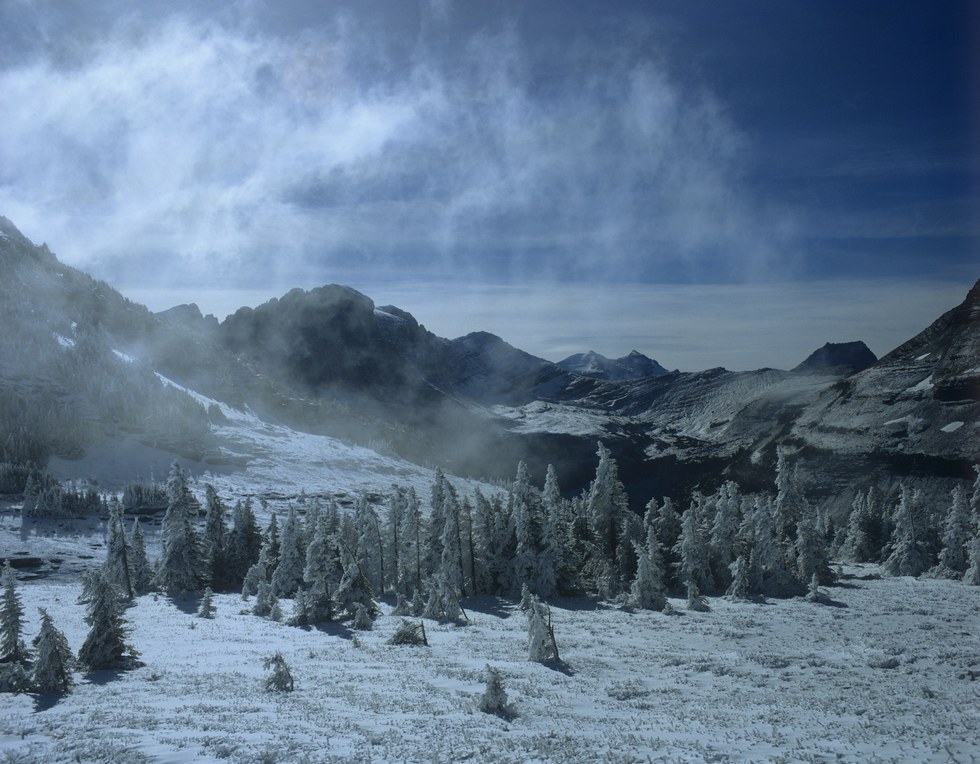
The snow covering those misty peaks may not be as common in the future. With rising temperatures, the first snows of the year start later and later, the first melts start sooner and sooner, and less snow falls overall.
Lakes And Water Reservoirs
With snow seasons becoming shorter and glaciers disappearing, the lakes and natural reservoirs that are fed each year by the melt-off from their frozen sources are starting to dwindle each year. Some mountain towns and major cities rely on snow and glacier melt for up to 80 percent of their water supply. Agricultural officials in some regions worry farms may not be able meet irrigation needs, similar to what is happening now in California’s drought.
Waterfalls
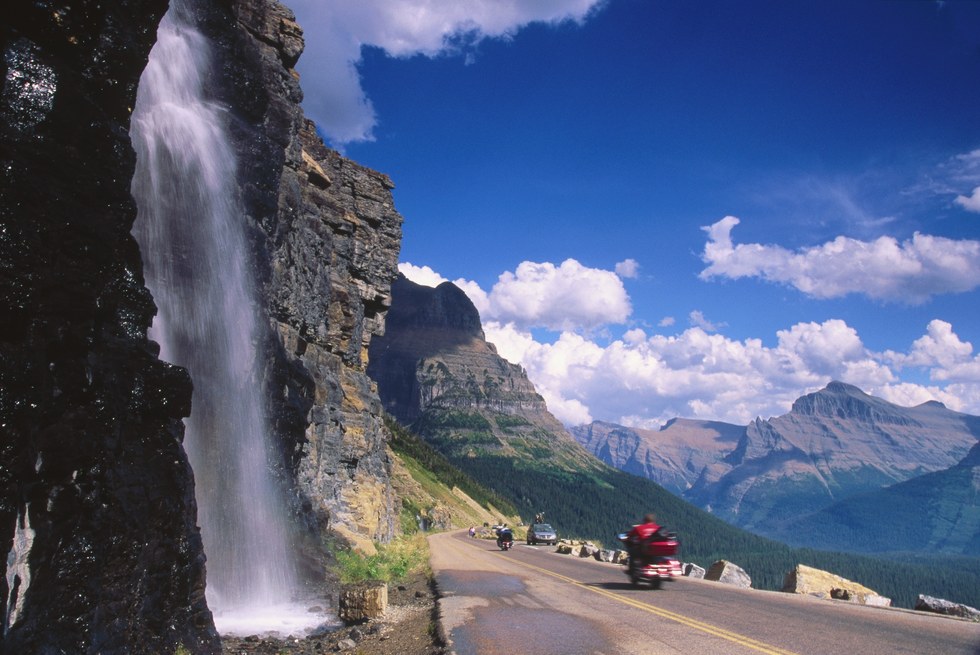
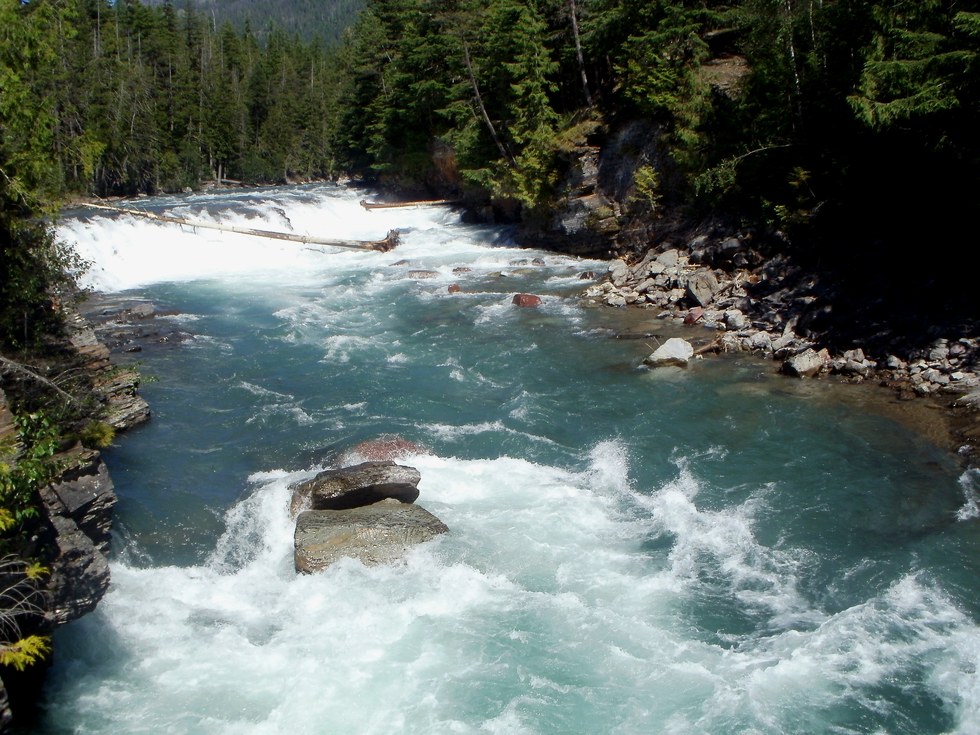
One scenic sight that is sure to disappear in the park with glaciers and snow is the waterfall. Most waterfalls are only active during the seasonal melt, but without anything to fuel the flow, most have slowed to just a trickle.
Eroding Rivers
While the remaining glaciers continue to melt, some rivers have experience a temporary increase in flow levels. This can cause greater erosion than historical levels, which can damage some ecosystems.
Disappearing Fish
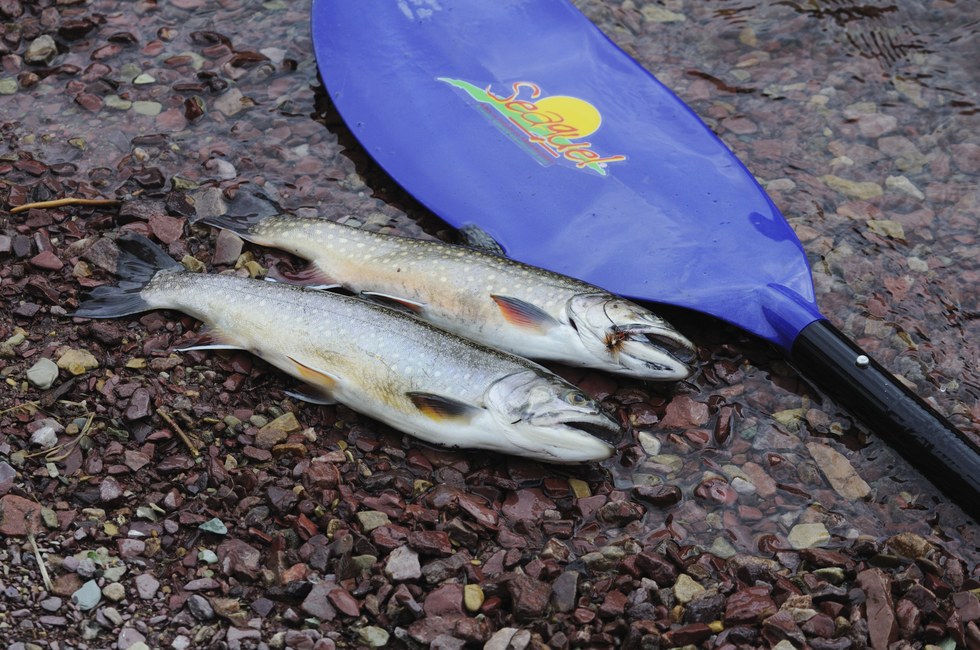
S.b. Nace/Lonely Planet/Getty ImagesWith those lakes and streams disappearing with the glaciers that feed them, so will many habitats and breeding grounds for trout and salmon. Fish cannons won’t be able to help in this case, and the changes could have a rippling effect for other species that rely on the fish for food, such as grizzly bears.
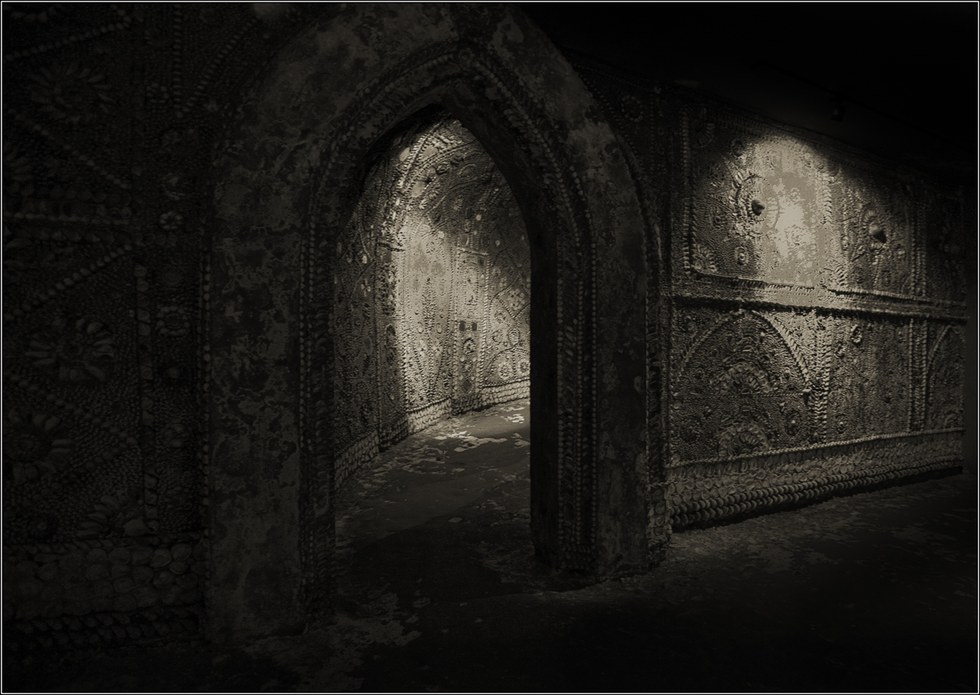
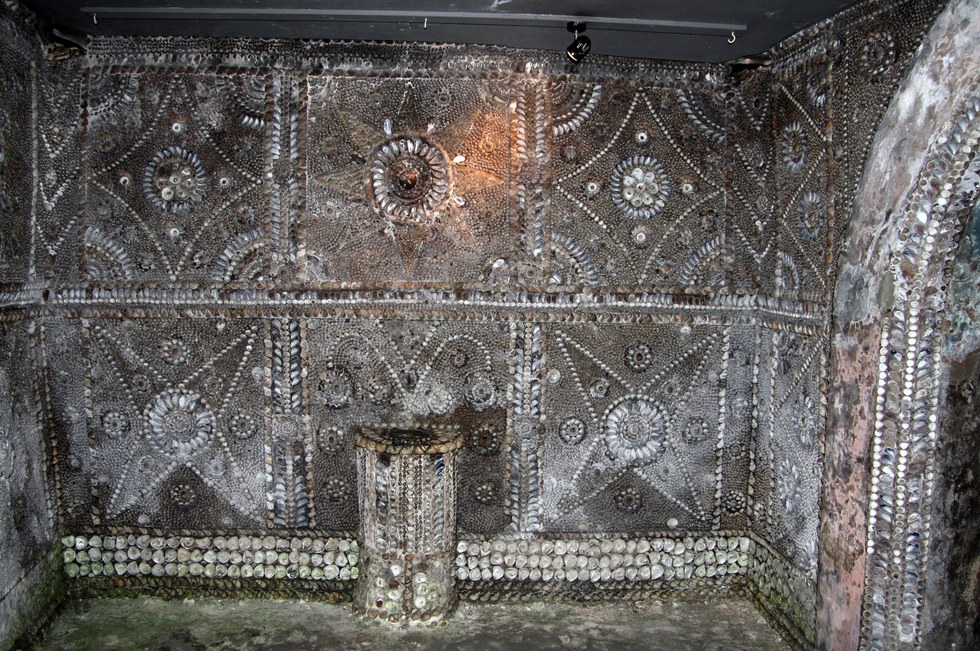
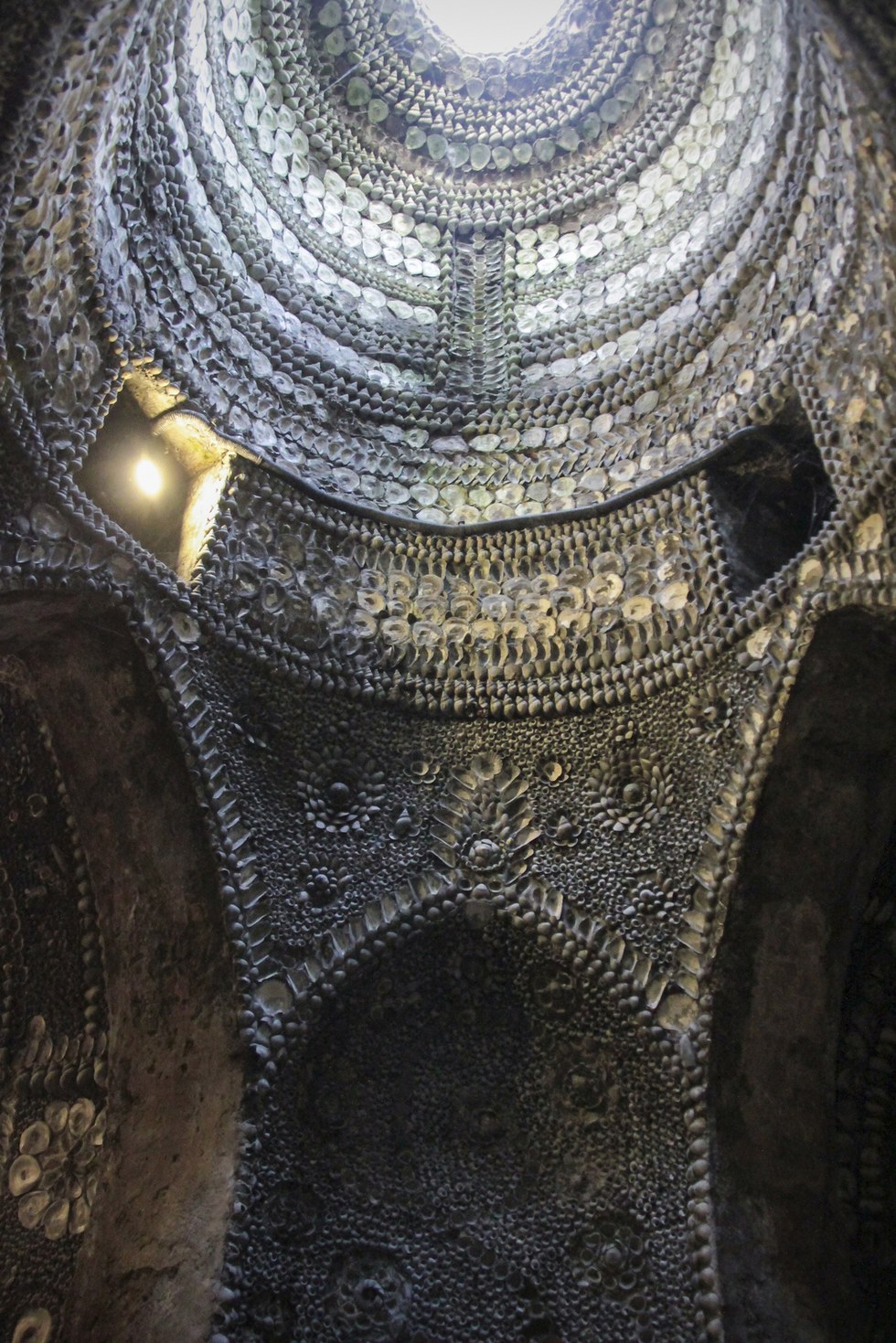
In an unassuming corner of Margate, Kent in England is a spectacular series of underground passageways covered in millions of seashells. The Margate Grotto was discovered in 1835, but it is still unknown how old the grotto really is, or who built it.
Ancient Roman temple, a rich aristocrat’s folly, or a secret Knights Templar construction? Here is a look at the mysterious Margate Grotto.
Shell Grotto
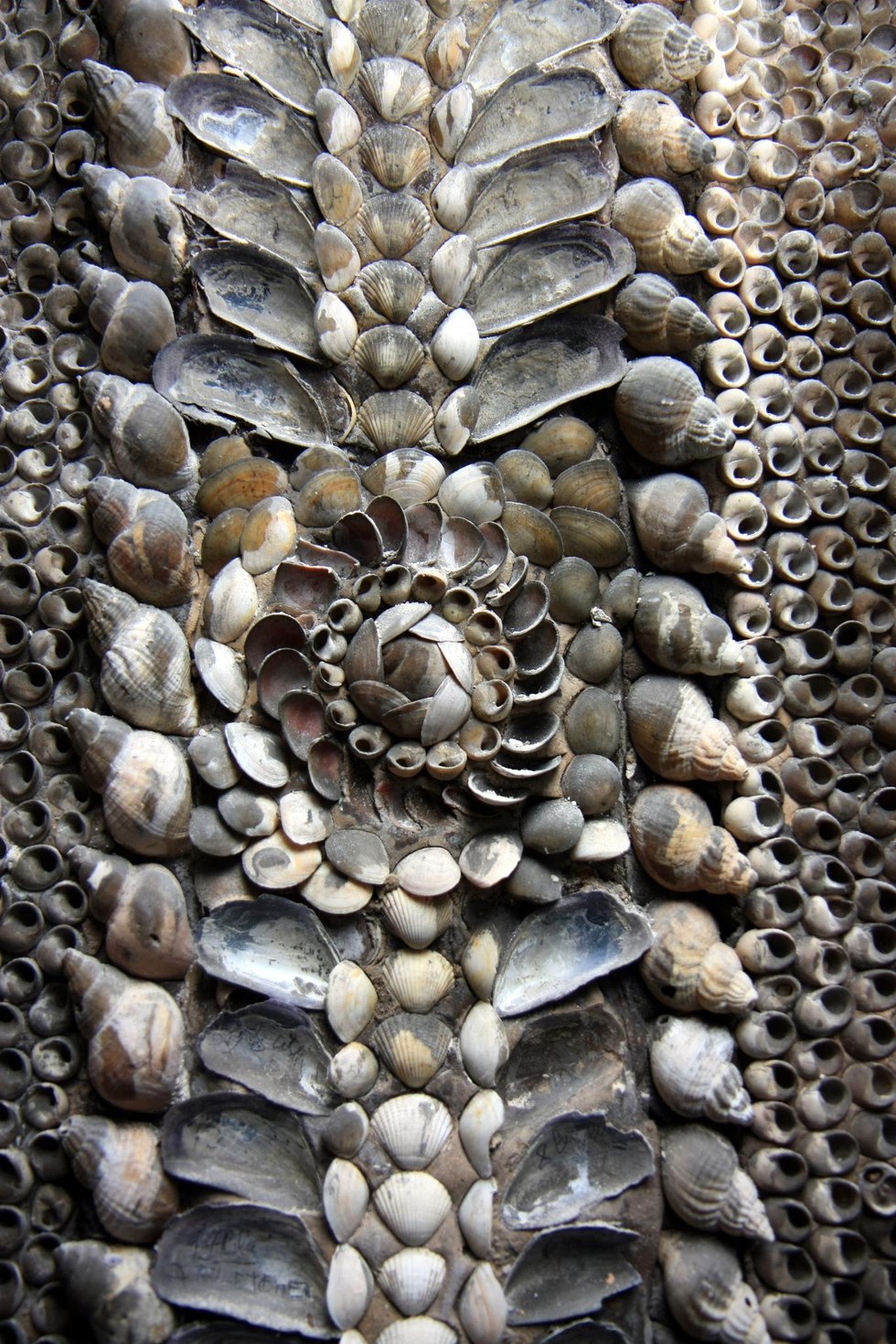
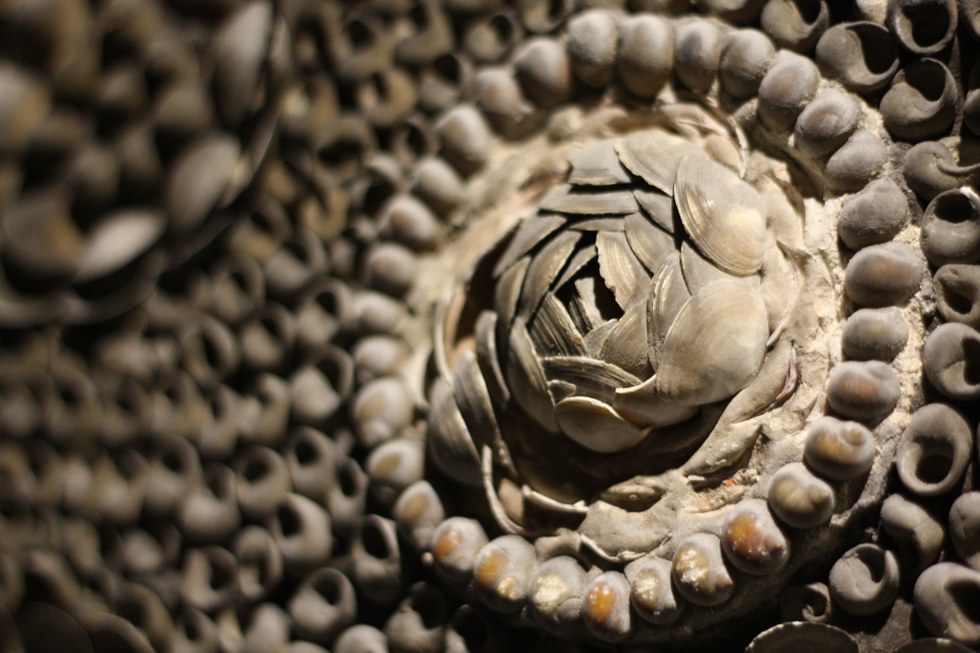
Located in Margate, Kent in Southeast England, the ornate subterranean passageway is almost completely covered in mosaics created entirely of seashells, totaling about 4.6 million shells.The grotto was discovered under a field in 1835 by James Newlove, a schoolteacher, with the first mention of it appearing in an article in the Kentish Gazette in 1838, announcing its forthcoming opening as a public attraction.
The exact age and purpose of the grotto remain unknown. Some have speculated that it served as a hideaway for smugglers, as all the shells—mussels, cockles, whelks, limpets, scallops, and oysters—are English in origin, though it’s unclear if smugglers would have time to decorate the walls. Others believe the grotto was a prehistoric construction built either as an astronomical calendar or a funerary building.
Seashell-decorated grottoes were popular among European nobility during the 1700s. Many believe the Margate grotto was built by an English nobleman who returned from seeing such an installation abroad, and wanted one of his own. Such displays of wealth and opulence were often meant to impress guests, however, making the secret location of the Margate grotto away from any large estates puzzling.
The grotto would also have taken considerable manpower to construct, with locals needed to transport and place all the millions of shells. No historical records mention any such project, however.Some believe the grotto may be a Roman construction, though again there is little substantial evidence to support the theory.The grotto changed owners in 1932, and has remained in private ownership ever since, with the new owner installing cleaner electric lighting and undertaking cleaning of the shells over the years.
Mick Twyman of the Margate Historical Society recently put forward the hypothesis that the grotto was built by the Knights Templar sometime in the 1100s, based on an analysis of the angles used in its construction, as well as the appearance of several altars inside.It has been suggested that the shells in the grotto be carbon dated to determine their origin, but work has been delayed since a large number of shell samples would be needed to weed out the earliest shells from those used in restorations.
Various restoration work has been done on the grotto over the years, as it has suffered the effects of water penetration. The previous gas lighting also stained many of the shells with soot. In 2008, the non-profit Friends of the Shell Grotto were formed to help conserve and preserve the grotto as a unique historical monument.
A solid, non-working Colt 1911 static model by TaylarRoids is printed on a household printer; is this a digital blueprint? Credit: Richard Matthews
3-D printed guns are back in the news after Queensland set a legal precedent for giving Kyle Wirth a six-month suspended sentence for fabricating a number of gun parts.
As presiding Judge Katherine McGuinness acknowledged, Wirth didn’t produce an entire gun – it took police to add a few key parts in order for the gun to successfully fire a bullet – but he was “trying to make a gun”.
As such, she said “there is a real need to deter and protect the public from such offending”.
But if it’s illegal to build a gun via conventional means without a licence, what’s the concern over making guns using 3-D printers in particular?
And for those who are either researching the capabilities of 3-D printers – a form of additive manufacturing – or using them at home or in their business, it’s important to understand the legal boundaries under which they can be used.
3-D printed firearms in Australia
3-D printed guns currently occupy a grey area in terms of their legality in many jurisdictions around Australia. For example, the South Australian Police released a guide outlining which kinds of imitation firearms are considered legal.
The distinction between a “regulated imitation firearm” and a children’s toy is significant, as a South Australian man discovered in 2015. He was charged with a firearms offence after police found a toy gun in a box along with a single shotgun shell.
Is a list of coordinates in three dimensional space a digital reproduction of a technical drawing?
The judge acquitted him because the gun was clearly a child’s cap gun and could not be modified to fire the shell.
However, according to the South Australian Police’s guide, the “gun” pictured at the top of this article, although non-functional, is technically neither a “moulded imitation firearm” nor is it an “imitation firearm carved from timber, plastic or other material”. This means it’s unclear how it would be regarded by police or the courts.
New South Wales takes a different approach on the issue. The Firearms and Weapons Prohibition Legislation Amendment Bill 2015 made it illegal to possess digital files that can be used to manufacture firearms on “3-D printers or electronic milling machines”.
The act was amended “to create a new offence of possessing digital blueprints”, although the definition of a “digital blueprint” is a little ambiguous. As defined, it captures “any type of digital (or electronic) reproduction of a technical drawing of the design of an object”. As written, this could even mean a photograph of a technical drawing. But technical drawing files are not always needed for 3-D printing.
In 3-D printing, drawing files are used to create GCode, a computer control language used to guide the print head and the amount of plastic to extrude. Is GCode a digital reproduction? Even if it is, it does not stop someone 3-D printing gun parts in another jurisdiction in Australia or overseas where they’re not illegal and then posting it back to NSW.
It was this fear that drove the Queensland Palmer United Party to introduce a bill in 2014 to make 3-D printing of firearms illegal. It was rejected by the parliamentary committee and never reintroduced.
When Labor took power in Queensland following the 2015 election, it defended the move and released a statement stating that “Queensland already has legislation dealing with the unlawful manufacture of weapons that carries with it some of the harshest penalties in Australia”.
Hence Kyle Wirth was charged in 2015 with manufacturing offensive weapons, including a plastic knuckle duster. He was not charged under any legislation that prevented him from 3-D printing parts, as the PUP bill would have outlawed.
The parts Wirth printed and stored in bags. Credit: Queensland Police Service
Plastic or not, it is illegal under nationally unified gun laws to make a gun without a licence. If this is the case, why did NSW feel the need to ban digital blueprints? The answer could come from the future prospects of 3-D printing.
Towards the future
In the next 20 years we will be able to print drugs, metals and substances at an atomic level – possibly all at home.
Regulation of these things is currently predicated on the idea that producing them typically required expertise and specialised equipment. But that may no be the case for long.
This will mean we need a new unified approach to legislation that specifically speaks to the capabilities of 3-D printers, and the distribution of the files they use.
New South Wales is the only state that has started outlawing the digital blueprints needed for additive manufacturing of illegal objects. This is a step in the right direction.
However, we need a classification of digital blueprints. AustralianClassification is already responsible for passing judgement on a wide array of media. In the future we will likely see such an agency extended to cover digital blueprints available or for sale to the public.
When the 2020 Olympics gets underway in Tokyo, Project Sky Canvas hopes to paint the sky above with shooting stars.The plan is to put a micro-satellite in orbit that will fire tiny particles into the atmosphere.As they fall to Earth they will burn up and become on-demand shooting stars that can be directed to any chosen location and be seen within a radius of up to 200km (124 miles).
ALE explains: “When the satellite stabilizes in orbit, we will discharge the particles using a specially designed device on board.
The particles will travel about one-thirds of the way around the Earth and enter the atmosphere. It will then begin plasma emission and become a shooting star.The incredible sight will be at an altitude of around 35 to 50 miles, and will be visible across a wide radius from the ground.
The price for launching the satellite is expected to top 1 billion yen
Incredible images show hundreds of axe and fire-wielding vikings ‘storming’ the Shetland Islands for spectacular Up Helly Aa festival
Burly vikings descended on Lerwick in winged helmets and sheepskins to celebrate the rebirth of the sun as part of tradition that dates back to the 19th century.DOZENS of burly vikings could be seen parading through the streets of Lerwick in the Shetland Islands for its annual Up Helly Aa fire festival on Tuesday.The 60 men dressed head-to-toe in full traditional costumes for the spectacle, which attracts hundreds visitors from around the globe.
The Jarl Squad marched through the streets of Lerwick before torching galley during the Up Helly Aa viking festival.
A sight to be seen … the festival takes place on the last Tuesday of every January, and sees thousands descend on Lerwick.
Festival leader Lyall Gair marches with his squad as huge crowds gather to catch a glimpse of the spectacle.
Thousands of locals and visitors turn up for the festival every year, which is the largest of its kind in Europe.
Before it went up in flames … huge crowds flocked to watch the spectacle.
The festival is a descendant of the ancient feast of Yule, which the vikings held to celebrate the rebirth of the sun
We use cookies to ensure that we give you the best experience on our website. If you continue to use this site we will assume that you are happy with it.