How to Build the Best Lounge PC – Mini ITX Gaming Rig
How to Build the Best Lounge PC – Mini ITX Gaming Rig

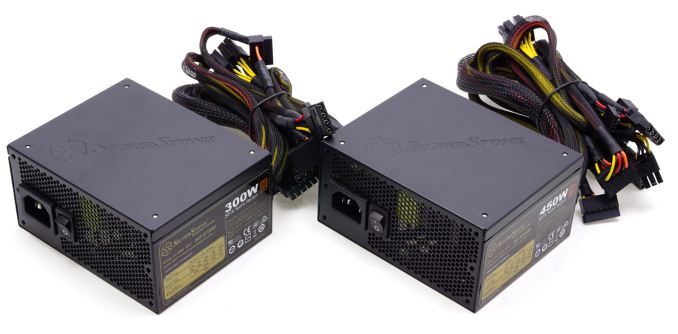
With the vast selection of advanced ATX PSUs available today, PC users can easily pick one that perfectly suits their budget and needs. When shopping for an SFX PSU however, the options are very limited, as very few companies do market advanced high quality SFX PSUs. Even when the company has a few SFX units available, most of the time these are expensive top-tier models, leaving budget-driven users bewildered.
One of the companies that invests a lot on small form factor systems is SilverStone. The company currently markets dozens of proprietary PC cases, many of which require SFX PSUs. SilverStone is also marketing some of the most advanced SFX PSUs available, such as the 700W SX700-LPT and their newly released 800W SX800-LTI with 80Plus Titanium compliance. Outrageously powerful (and expensive) SFX PSUs are not useful to users that want to build simple, compact media or office PCs. Their “SFX extended” form factors make them incompatible with very compact case designs anyway, including many of SilverStone’s own products.
Today we are having a look at the two SFX units that SilverStone is offering for budget-conscious builders, the ST30SF and the ST45SF. Although they are not as grand as the top-tier PSUs we mentioned before, they do have a high power output of 300W and 450W respectively, sufficient for typical media and gaming PCs. They only have an 80Plus Bronze efficiency certification, but what they lack in technology they make up for in price. We should clarify that the units in this review are the latest version, V2.0 for the ST30SF and the V3.0 for the ST45SF, that have been reengineered for improved performance in home and gaming PCs. Most of the differences over their previous versions will be highlighted in the following pages, but the first difference that we should point out is that the new units are rated at 40°C ambient temperature, whereas the previous versions were rated at 50°C.
| SilverStone ST45SF Power specifications ( Rated @ 40 °C ) | |||||
| AC INPUT | 100 – 240 VAC, 50 – 60 Hz | ||||
| RAIL | +3.3V | +5V | +12V | +5Vsb | -12V |
| MAX OUTPUT | 20A | 20A | 37.5A | 3A | 0.3A |
| 110W | 450W | 15W | 3.6W | ||
| TOTAL | 450W | ||||
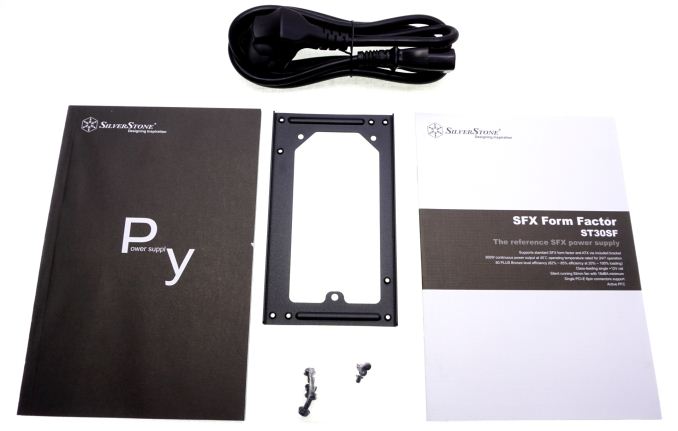
| Connector type | SilverStone ST30SF | SilverStone ST45SF |
| ATX 24 Pin | 1 | 1 |
| EPS 4+4 Pin | 1 | 1 |
| EPS 8 Pin | – | – |
| PCI-E 6+2 Pin | – | 1 |
| PCI-E 6 Pin | 1 | 1 |
| SATA | 3 | 3 |
| Molex | 2 | 2 |
| Floppy | 1 | 1 |
posted by james
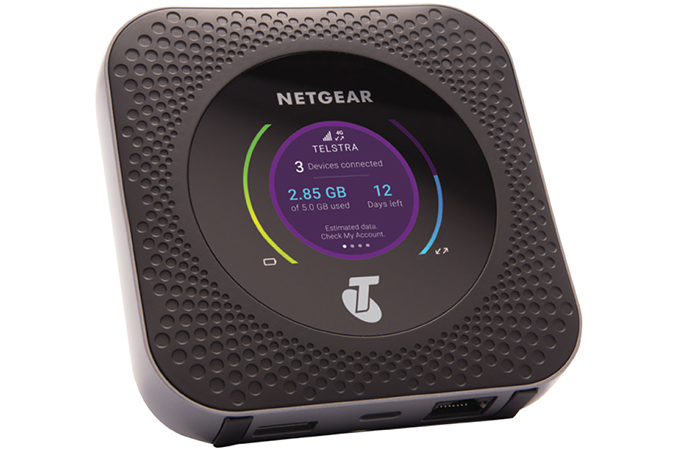
Netgear this week announced the Nighthawk M1 mobile router, which is the industry’s first 4G LTE device with download speed up to 1 Gbps. The Nighthawk M1 is powered by Qualcomm’s X16 LTE modem with 4×4 MIMO announced a year ago and will be available only on Telstra’s 4GX LTE network in Australia. As soon as similar networks are launched in different parts of the world, the same router or its derivatives may hit the market elsewhere as well.
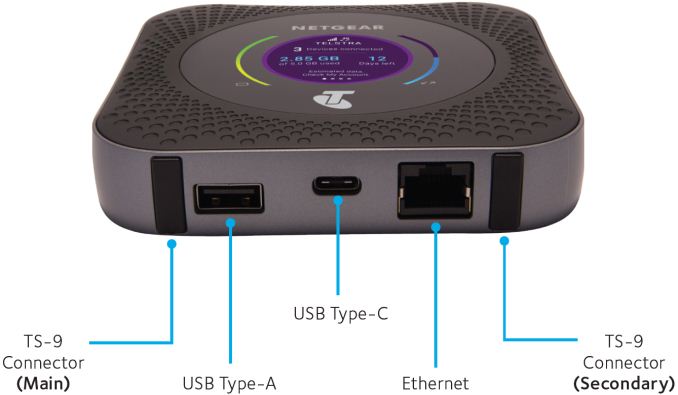
The Netgear Nighthawk M1 mobile router is aimed at those who need to set up ultra-fast mobile broadband connection for multiple people and up to 20 devices in areas where cable broadband is unavailable (there are a lot of rural areas in Australia where there is no broadband). The Nighthawk M1 can be used like a normal portable router (it has a GbE port as well as two USB headers) or as a NAS/media streamer (it has a microSD slot). The router also has an inbuilt battery (5040 mAh) which is rated for up to 24 hours of standard use. The Nighthawk M1 does not require any special setup, but it is equipped with a 2.4” display to monitor its performance/data usage and there is also a special app for Android and iOS that allows a user to manage the router (network settings, parental controls, etc.).
At the heart of the Netgear Nighthawk M1 there is Qualcomm’s Snapdragon X16 LTE modem (paired with Qualcomm’s WTR5975 RF transceiver). The modem supports 4×4 MIMO, four carrier aggregation (4xCA) and higher order modulation (256QAM) to download data at up to 1 Gbps (in select areas) as well as 64QAM and 2CA to upload data at up to 150 Mbps over Telstra’s 4GX LTE network (Telstra’s network is only 3CA it is worth noting). We already know that the X16 modem will be integrated into Snapdragon 835 SoCs for smartphones, but right now it is available only as a standalone chip. The Nighthawk M1 router is also equipped with Qualcomm’s 2×2 802.11 b/g/n/ac Wi-Fi solution that can connect up to 20 devices simultaneously using 2.4 GHz and 5 GHz bands concurrently.
| Netgear Nighthawk M1 MR1100 | |
| SoC | Qualcomm Snapdragon X16 LTE modem MDM9x50 |
| Display | 2.4″ |
| Network | 4G: 4GX LTE CAT 16, 4-band CA, 4×4 MIMO 700/900/1800/2100/2600 MHz 3G: 850/900/1900/2100 MHz |
| LTE | Down: 1000 Mb/s Up: 150 Mb/s |
| Dimensions | 105.5 × 105.5 × 20.35 mm |
| Weight | 240 grams |
| Battery | 5040 mAh (removable) |
| Connectivity | 2×2 802.11 b/g/n/ac Wi-Fi for up to 20 devices |
| External Ports | Ethernet USB-A USB-C 2 × TS-9 connectors for external antennas |
| Storage | MicroSD card with media server/NAS capabilities |
| SIM Size | unknown |
| Colors | Grey |
| Launch Country | Australia |
| Price | $360 AUD ($276 USD) |
The Netgear Nighthawk M1 (MR1100) mobile router will be available from Telstra in Australia later this month for $360 AUD ($276 USD) standalone. Telstra also plans to offer the router with a range of broadband plans.
by Anton Shilov

