Freemake YouTube to MP3 Boom
A streamlined music downloader that puts all the tools you need in a single neat package
Don’t worry, the app is a lot less clunky than the name. Freemake’s music downloader is designed specifically for getting music from YouTube, and it automatically downloads MP3s in the highest possible quality – 320Kbps – if available. You can use it as a YouTube search engine, enabling you to find music from the comfort of your desktop without having to invoke your web browser, or you can paste a YouTube address into it to start a download.
There aren’t any fancy swarming features like you’ll find with torrent downloads, but as a cheap and cheerful way to get YouTube audio, Boom is hard to beat.
Download here: Freemake YouTube to MP3 Boom
The Intel Core i7-7700K (91W) Review: The New Out-of-the-box Performance Champion
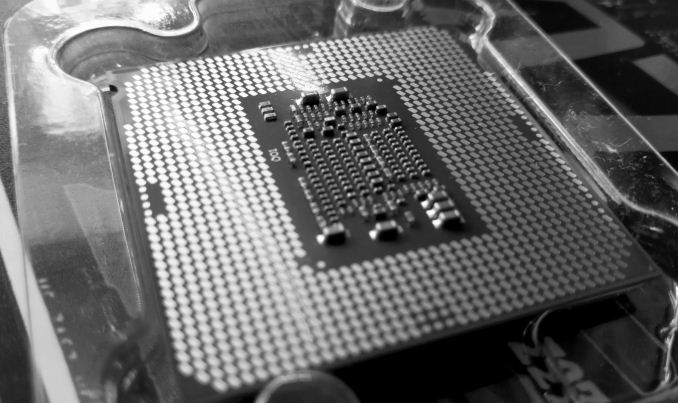
The i7-7700K, launched today, is Intel’s fastest ever consumer grade processor. Using Intel’s third set of processors at 14nm, using the new 14+ variant, we get processors with a better frequency / voltage curve that translates into more performance, better efficiency, and the potential to push the silicon further and harder. Here is our review.
Meet Kaby Lake, and 4.5 GHz Out-of-the-Box
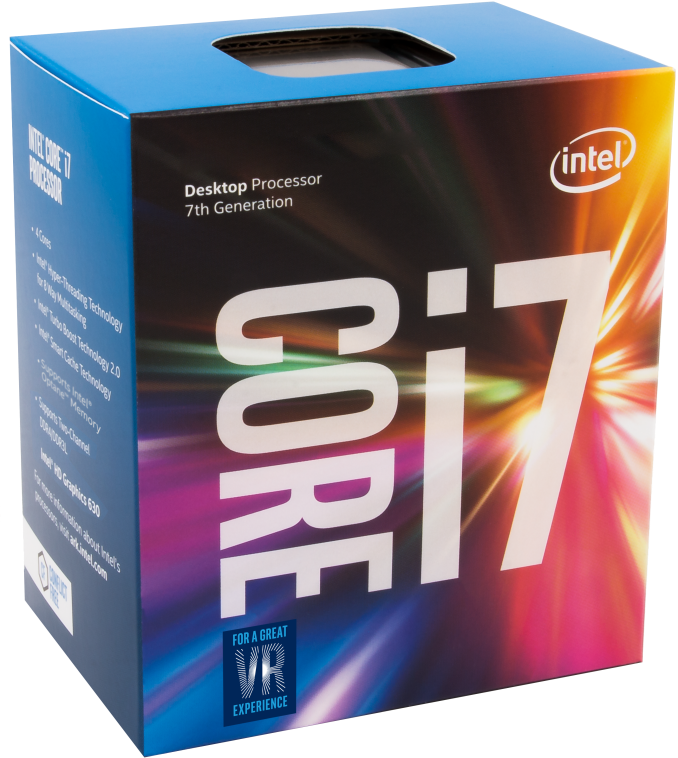
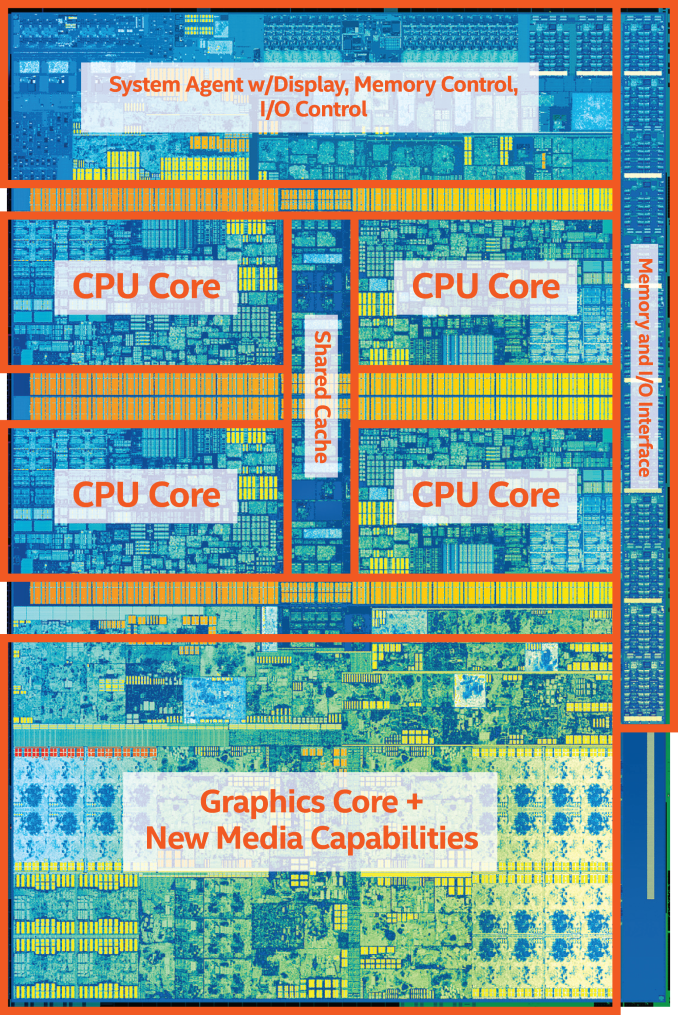
The i7-7700K is part of Intel’s 7th Generation of Core CPUs, which often goes by its internal code name ‘Kaby Lake’. The Kaby Lake family, as of today’s launch, stretches from 91W on the mainstream desktop down to 4.5W for notebook processors, all using the same underlying technology in different core and integrated graphics configurations. The i7-7700K is the top part of this processor family, featuring four cores with hyperthreading, a 4.2 GHz base frequency, a 4.5 GHz turbo frequency, a couple of new tricks and all for $303 list (so about $330 retail).
As a processor with the letter K in it, in Intel’s lingo this means the i7-7700K is an unlocked processor. Users with enough nous to understand the relationship between frequency, voltage, temperature and stability can take this processor above (or below) its standard operating frequency to get more performance without spending more money. The upshot of pushing the processor in this way is usually a higher power consumption, something that PC enthusiasts usually have to spare, and in the wrong hands a broken CPU through overclocking is worth the same as sand. There are two other K processors in the Kaby Lake family, the i5-7600K and the i3-7350K, which both have separate reviews as part of our launch coverage.
| Intel Kaby Lake S SKUs | |||||||
| Cores/ Threads |
Base/ Turbo |
IGP | L3 | eDRAM | TDP | Cost | |
| i7-7700K | 4/8 | 4.2/4.5 | HD 630 | 8 MB | – | 91 W | $305 |
| i7-7700 | 4/8 | 3.6/4.2 | HD 630 | 8 MB | – | 65 W | $272 |
| i7-7700T | 4/8 | 2.9/3.8 | HD 630 | 8 MB | – | 35 W | $272 |
| i5-7600K | 4/4 | 3.8/4.2 | HD 630 | 6 MB | – | 91 W | $217 |
| i5-7600 | 4/4 | 3.5/4.1 | HD 630 | 6 MB | – | 65 W | $199 |
| i5-7600T | 4/4 | 2.8/3.7 | HD 630 | 6 MB | – | 35 W | $199 |
| i5-7500 | 4/4 | 3.4/3.8 | HD 630 | 6 MB | – | 65 W | $179 |
| i5-7500T | 4/4 | 2.7/3.3 | HD 630 | 6 MB | – | 35 W | $179 |
| i5-7400 | 4/4 | 3.0/3.5 | HD 630 | 6 MB | – | 65 W | $170 |
| i5-7400T | 4/4 | 2.4/3.0 | HD 630 | 6 MB | – | 35 W | $170 |
| i3-7350K | 2/4 | 4.2 | HD 630 | 4 MB | – | 60 W | $157 |
| i3-7320 | 2/4 | 4.1 | HD 630 | 4 MB | – | 51 W | $139 |
| i3-7300 | 2/4 | 4.0 | HD 630 | 4 MB | – | 51 W | $129 |
| i3-7300T | 2/4 | 3.5 | HD 630 | 4 MB | – | 35 W | $129 |
| i3-7100 | 2/4 | 3.9 | HD 630 | 3 MB | – | 51 W | $109 |
| i3-7100T | 2/4 | 3.4 | HD 630 | 3 MB | – | 35 W | $109 |
Intel calls the desktop like of processors the S series, and Kaby Lake-S (or KBL-S) ranges from a dual core low power 35W i3-7100T to the high-end 91W i7-7700K. The idea here is to offer many different parts at different price points to cater for customer needs, such as performance, power, cost and feature set. With every launch Intel tries to entice users to upgrade from their older system (citing hundreds of millions of daily PCs being 3+ years old), and so having new features is key to having better performance too.
With the high-end i7-7700K, being the top processor, the main draw is typically performance and overclockability. This review aims to take us through both of these, and the reasons why.

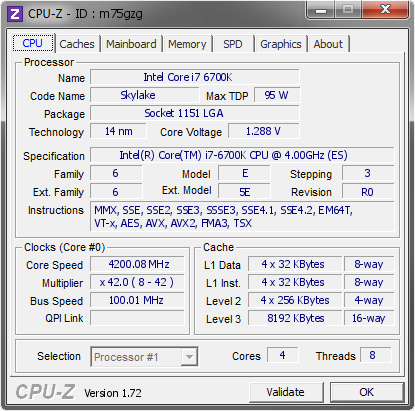
Comparing it to the previous generation high-end i7-6700K Skylake processor, we get the same configuration of cache hierarchy. The main difference between the two will be support for DDR4-2400 on the Kaby Lake rather than DDR4-2133, updated integrated graphics, a new generation of Speed Shift, AVX Offset support, and support for Intel’s ‘Optane Memory’.
Typically with each new generation of Intel CPUs brings about a fundamental increase in performance through the rate of instructions per cycle/clock (IPC) that the processor can go through. That being said, Intel has stated (and we’ve confirmed through testing) that Skylake and Kaby Lake are identical for IPC. As a result, the i7-7700K attempts to take the performance crown through frequency alone. The i7-6700K runs as 4.0 GHz base and 4.2 GHz turbo, while the i7-7700K runs at 4.2 GHz base and 4.5 GHz turbo. We quantify what this means in this review.
Speed Shift v2
For the i7-6700K family, Skylake, Intel introduced Speed Shift (v1). This was a feature that, at a high level, gave control of the voltage/frequency curve from the operating system to the processor. Using a series of internal metrics, such as instruction analysis and frequency, the CPU would automatically adjust the voltage and frequency of the processor as required. This afforded two major benefits: one, with the CPU in control it has access to many more points on the curve compared to the OS which is limited to specific P-states on the processor.
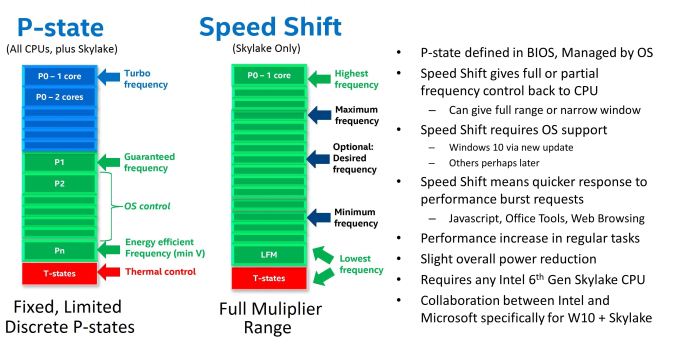
The second benefit is the speed of transition. A processor that can ramp up to a high frequency quickly and then drop down as needed can get through instructions quicker but also save power. Imagine driving a car, and having to wait 60 seconds to change a gear – it’s that sort of analogy.
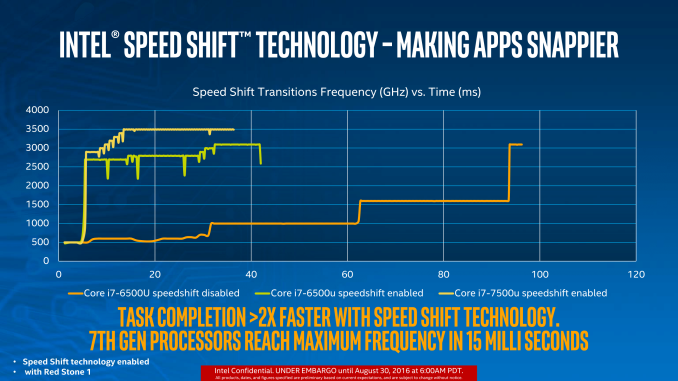
What Speed Shift v2 does in the i7-7700K and the Kaby Lake family, compared to v1 in Skylake, is manage those transitions to higher frequency faster. Before Speed Shift, transitions from idle to peak turbo were on the order of 100 milliseconds, and Speed Shift v1 took that to 30 milliseconds (with a good base established within 15). Speed Shift v2 means that peak performance from idle now happens in 10-15 milliseconds total. This means that interactions with the OS, such as touch, or actions that rely on low latency, can occur within a couple of frames on a 60 Hz display.
The benefit of Speed Shift lies a lot in touch devices, which perhaps doesn’t affect the i7-7700K in this review, but also in web interactions. A lot of web work is stop and start, such as scrolling or javascript functions.
There is one caveat however – Speed Shift currently only works in Windows 10. It requires a driver which is automatically in the OS (v2 doesn’t need a new driver, it’s more a hardware update), but this limitation does mean that Linux and macOS do not benefit from it. I would be hard pressed to not imagine that Apple and Intel were not working on a macOS driver, but as yet we have not had confirmation that one exists.
Optane Memory Support
The latest memory technology to hit prime time is Intel and Micron’s 3D XPoint. This is a non-volatile form of data storage that is bit addressable and can be used as DRAM or storage. Despite being at least a decade in the making, and being formally announced in 2014, it is still yet to show up commercially as it is still being developed. Intel plans to create 3D XPoint DRAM that is slightly slower than normal DRAM but both denser (more of it) and non-volatile (keeps the data after power loss, saves power altogether), as well as 3D XPoint Storage that is faster than standard NAND flash, and more configurable. It the scheme of things, we expect the storage based products to hit the market first.
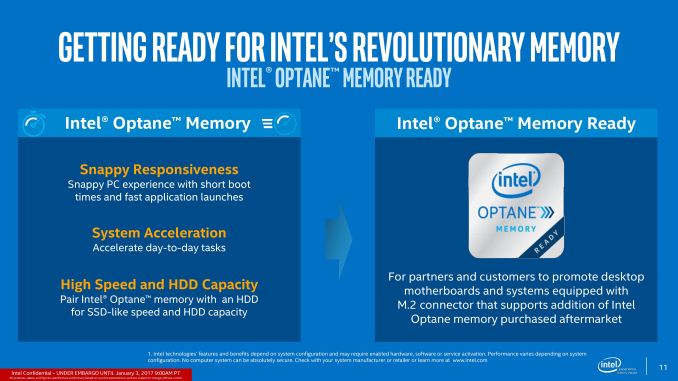
Intel, as far as we can tell, is set to release two main classes of product: Optane DRAM to be pin-compatible with DDR4 and require Optane DRAM enabled processors, and Optane SSDs which should work with any PCIe storage interface. ‘Optane Memory’ however, is something a little different. Based on pre-briefings, Optane Memory is certainly not Optane SSD we were told, but rather a storage cache for mechanical hard-drives. We’ve had this before with NAND flash drives, using Intel’s Rapid Storage Technology, and it seems that Kaby Lake and 200-series chipsets will support a new version of RST for PCIe-based storage. But because this is caching drive, such as the 16GB Optane Memory drives in Lenovo’s upcoming notebooks, and not Optane SSD, might lead us to believe that ‘Optane Memory’ drives are not designed to be directly user addressable.
All that being said, Intel has stated that Optane Memory standalone drives should hit the market nearer Q3 for general consumer use, which is more in-line with what we might expect to see with Optane SSDs in the enterprise space.

The best free parental control software
It’s hard to imagine anything less child-friendly than an uncensored internet. A rabid wolf, maybe, or a playground floored with broken glass and razor wire. The more connected we become the more we need everybody online – and that means trying to ensure that our children aren’t exposed to the very worst content, ideas and behaviour that exist online.
Software can’t do everything, of course, but it can help to make parents’ lives much easier. These are our picks of the best parental control tools.
Protect your kids on Windows, OS X and mobile devices with Qustodio’s free app
Qustodio
A full suite of parental control tools
Most parental control software is aimed at Windows, but Qustodio (think ‘custodian’) is also available for Mac, Android, iOS, Kindle and (weirdly) Nook.
The free version covers the basics, enabling you to set rules and time schedules, block pornography and other unsuitable content; if you go for the paid-for version that adds SMS monitoring, social media features and per-app controls. But even the free version is one of the most comprehensive parental control apps around.
Its raft of features and support for a wide range of platforms make Qustodio the best free parental control software, but there are some other excellent free programs available, some of which may be better suited to your individual needs as a parent. Read on for our top choices.
Download here: Qustodio
THE $7500 PC UNBOXING
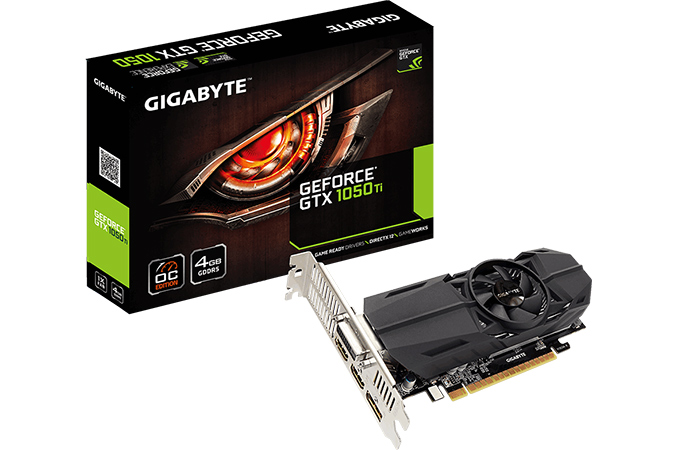
GIGABYTE Quietly Launches Low Profile GeForce GTX 1050, 1050 Ti Graphics Cards
GIGABYTE has quietly added two low-profile video cards to its lineup of products during CES. The graphics adapters are based on NVIDIA’s GeForce GTX 1050-series GPUs and will be among the most affordable gaming-grade products in the company’s family. The new low-profile add-in-cards will be especially useful for those building mini PCs or HTPCs as well as for those upgrading inexpensive computers from OEMs.
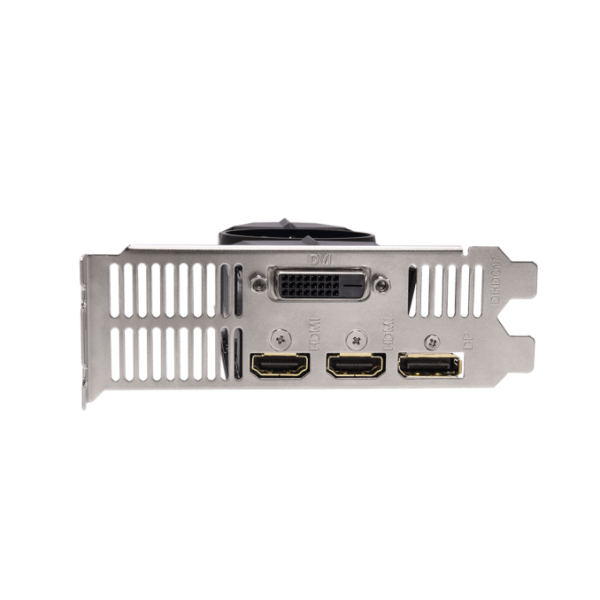
GIGABYTE’s GeForce GTX 1050 Ti OC Low Profile 4G and GeForce GTX 1050 OC Low Profile 2G graphics adapters are based on NVIDIA’s GP107 GPU (albeit, in different configurations) and carry 4 GB and 2 GB of GDDR5 memory running at 7 Gbps, respectively. Both cards use the same PCB (marked as V16156-0) as well as the dual-slot cooling system featuring an aluminum heatsink and a fan. As for connectivity, the boards also have a similar set of outputs: one DL-DVI-D, two HDMI 2.0b and one DisplayPort 1.4 with HDCP 2.2 support that is required for Ultra HD Blu-ray playback.
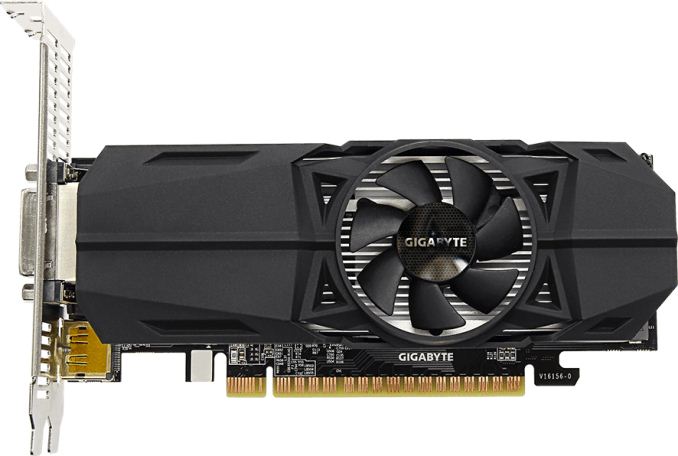
It is noteworthy that GIGABYTE decided to slightly increase GPU clock-rates of its low-profile GeForce GTX 1050-series graphics cards versus NVIDIA’s reference designs to give them some extra punch over rivals. Meanwhile, TDP and power requirements of its low profile GTX 1050-series graphics cards remained at approximately 75 W level, which means no additional power connectors are required and the cards can be installed into any contemporary computer with a PCIe x16 slot.
| Specifications of Low Profile GeForce GTX 1050-Series Graphics Cards | ||||||||
| GIGABYTE 1050 Ti OC LP 4G |
MSI 1050 Ti LP 4G |
GIGABYTE 1050 OC LP 2G |
MSI GTX 1050 LP 2G |
|||||
| SKU | GV-N105TOC-4GL | GV-N1050OC-2GL | ||||||
| Stream Processors | 768 | 640 | ||||||
| Texture Units | 48 | 40 | ||||||
| ROPs | 32 | |||||||
| Core Clock (MHz) | 1303 – 1328 | 1290 | 1366 – 1392 | 1354 | ||||
| Boost Clock (MHz) | 1417 – 1442 | 1392 | 1468 – 1506 | 1455 | ||||
| Memory | Capacity | 4 GB | 2 GB | |||||
| Type | GDDR5 | |||||||
| Clock | 7 Gbps | |||||||
| Bus Width | 128 bit | |||||||
| Outputs | DisplayPort | 1 × DP 1.4 | ||||||
| DVI | 1 × DVI-D | |||||||
| HDMI 2.0b | 2 | 1 | 2 | 1 | ||||
| TDP | 75 W | |||||||
| Launch Date | 1/2017 | 11/2016 | 1/2017 | 11/2016 | ||||
It seems like low profile graphics cards are back courtesy of NVIDIA’s GeForce GTX 1050-series as GIGABYTE is the second company to announce such parts after MSI, and it likely that these two companies will not be the only suppliers of such products. For those building low-power HTPCs or upgrading entry-level PCs, the GP107-based graphics adapters seem to be a good choice because the GPU supports DirectX 12 and Vulkan APIs as well as has an advanced media playback engine that features hardware-accelerated decoding and encoding of H.265 (HEVC) video.
GIGABYTE does not specify MSRPs for its GeForce GTX 1050 Ti OC Low Profile 4G and GeForce GTX 1050 OC Low Profile 2G graphics adapters on its web-site, as these are typically determined at regional release. Given the positioning of these products, it unlikely that they will cost significantly more than NVIDIA’s MSRPs for similar video cards: $139 for the GTX 1050 Ti and $109 for the GTX 1050.