With the vast selection of advanced ATX PSUs available today, PC users can easily pick one that perfectly suits their budget and needs. When shopping for an SFX PSU however, the options are very limited, as very few companies do market advanced high quality SFX PSUs. Even when the company has a few SFX units available, most of the time these are expensive top-tier models, leaving budget-driven users bewildered.
One of the companies that invests a lot on small form factor systems is SilverStone. The company currently markets dozens of proprietary PC cases, many of which require SFX PSUs. SilverStone is also marketing some of the most advanced SFX PSUs available, such as the 700W SX700-LPT and their newly released 800W SX800-LTI with 80Plus Titanium compliance. Outrageously powerful (and expensive) SFX PSUs are not useful to users that want to build simple, compact media or office PCs. Their “SFX extended” form factors make them incompatible with very compact case designs anyway, including many of SilverStone’s own products.
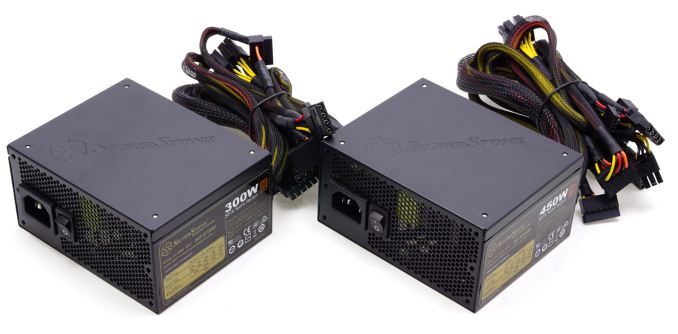
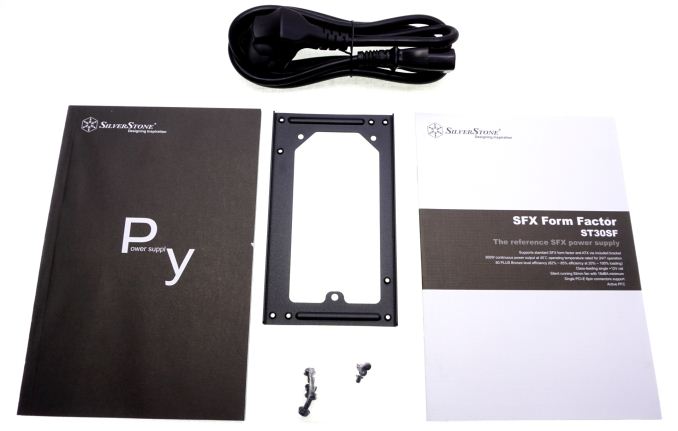
Today we are having a look at the two SFX units that SilverStone is offering for budget-conscious builders, the ST30SF and the ST45SF. Although they are not as grand as the top-tier PSUs we mentioned before, they do have a high power output of 300W and 450W respectively, sufficient for typical media and gaming PCs. They only have an 80Plus Bronze efficiency certification, but what they lack in technology they make up for in price. We should clarify that the units in this review are the latest version, V2.0 for the ST30SF and the V3.0 for the ST45SF, that have been reengineered for improved performance in home and gaming PCs. Most of the differences over their previous versions will be highlighted in the following pages, but the first difference that we should point out is that the new units are rated at 40°C ambient temperature, whereas the previous versions were rated at 50°C.
SilverStone ST45SF Power specifications ( Rated @ 40 °C )
If you had one of these lodged in your skull, you wouldn’t be able to sleep either.
The woman knew after waking up suddenly in the middle of the night that the pain in her head — which had an itchy, scratchy feel to it — couldn’t be normal. Boy was she ever right.
A trip to the hospital yielded the cause — doctors pulled a live cockroach from her skull.
The 42-year-old woman, who lives in a village outside of Chennai, India, ended up at Stanley Medical College.
She was complaining of a severe headache and was having difficulty breathing.
A doctor conducted an endoscopy to determine the source of her pain. At first he didn’t see anything. Then he did — the legs of some kind of creature.
“We didn’t know what it was,” M.N. Shankar, professor and head of the Ear, Nose, Throat Department at Stanley Medical College, told CNN. “We didn’t know whether it was a wasp, or some other insect. Slowly, we had to pull it out.”
The cockroach was pulled out with the help of suction machines and forceps over the course of 45 minutes. It was about an inch long and still alive. It had been in the woman’s body for about 12 hours. Her respiratory problems immediately ceased.
“The cockroach had burrowed into the roof of the nose, almost near the skull base, which is the dividing point between the brain and the nose,” Shankar said. “It was quite unusual.”
It was also potentially dangerous. Shankar said if the cockroach had remained in the woman’s head, it would have likely died. That might have caused an infection which, if it spread through the body, would’ve killed her.
Physicians at the hospital have removed worms and flies from people, but this was the first time anyone remembers pulling out a cockroach.
The scariest part of all this? Shankar said there’s really no good way to prevent this from happening.
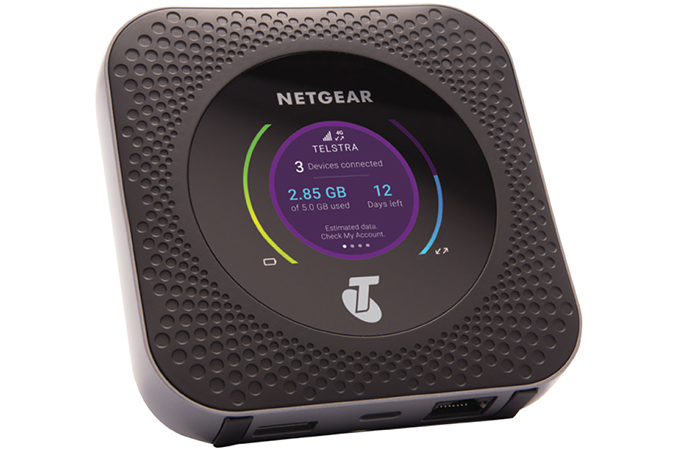
Netgear this week announced the Nighthawk M1 mobile router, which is the industry’s first 4G LTE device with download speed up to 1 Gbps. The Nighthawk M1 is powered by Qualcomm’s X16 LTE modem with 4×4 MIMO announced a year ago and will be available only on Telstra’s 4GX LTE network in Australia. As soon as similar networks are launched in different parts of the world, the same router or its derivatives may hit the market elsewhere as well.
The Netgear Nighthawk M1 mobile router is aimed at those who need to set up ultra-fast mobile broadband connection for multiple people and up to 20 devices in areas where cable broadband is unavailable (there are a lot of rural areas in Australia where there is no broadband). The Nighthawk M1 can be used like a normal portable router (it has a GbE port as well as two USB headers) or as a NAS/media streamer (it has a microSD slot). The router also has an inbuilt battery (5040 mAh) which is rated for up to 24 hours of standard use. The Nighthawk M1 does not require any special setup, but it is equipped with a 2.4” display to monitor its performance/data usage and there is also a special app for Android and iOS that allows a user to manage the router (network settings, parental controls, etc.).
At the heart of the Netgear Nighthawk M1 there is Qualcomm’s Snapdragon X16 LTE modem (paired with Qualcomm’s WTR5975 RF transceiver). The modem supports 4×4 MIMO, four carrier aggregation (4xCA) and higher order modulation (256QAM) to download data at up to 1 Gbps (in select areas) as well as 64QAM and 2CA to upload data at up to 150 Mbps over Telstra’s 4GX LTE network (Telstra’s network is only 3CA it is worth noting). We already know that the X16 modem will be integrated into Snapdragon 835 SoCs for smartphones, but right now it is available only as a standalone chip. The Nighthawk M1 router is also equipped with Qualcomm’s 2×2 802.11 b/g/n/ac Wi-Fi solution that can connect up to 20 devices simultaneously using 2.4 GHz and 5 GHz bands concurrently.
Netgear Nighthawk M1 MR1100
SoC
Qualcomm Snapdragon X16 LTE modem MDM9x50
Display
2.4″
Network
4G: 4GX LTE CAT 16, 4-band CA, 4×4 MIMO 700/900/1800/2100/2600 MHz 3G: 850/900/1900/2100 MHz
LTE
Down: 1000 Mb/s Up: 150 Mb/s
Dimensions
105.5 × 105.5 × 20.35 mm
Weight
240 grams
Battery
5040 mAh (removable)
Connectivity
2×2 802.11 b/g/n/ac Wi-Fi for up to 20 devices
External Ports
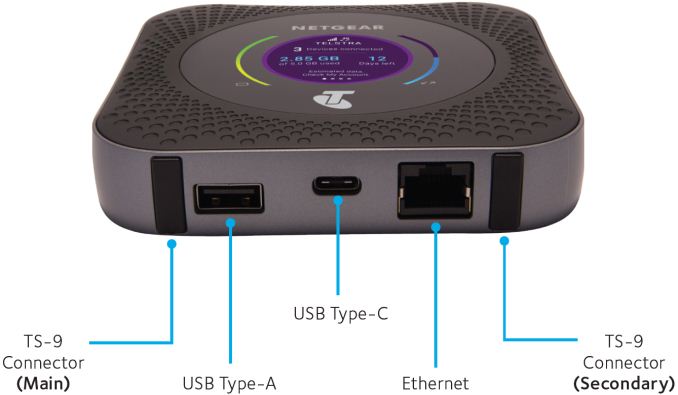
Ethernet USB-A USB-C 2 × TS-9 connectors for external antennas
Storage
MicroSD card with media server/NAS capabilities
SIM Size
unknown
Colors
Grey
Launch Country
Australia
Price
$360 AUD ($276 USD)
The Netgear Nighthawk M1 (MR1100) mobile router will be available from Telstra in Australia later this month for $360 AUD ($276 USD) standalone. Telstra also plans to offer the router with a range of broadband plans.
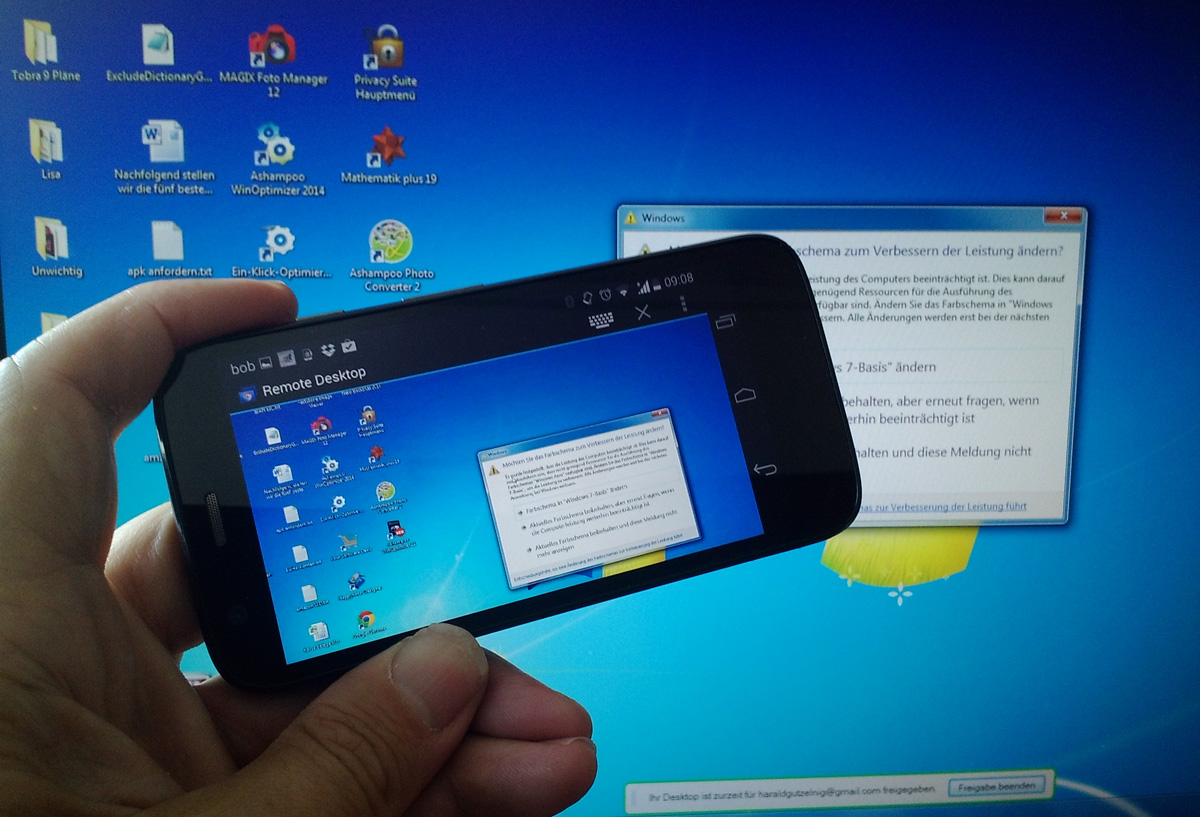
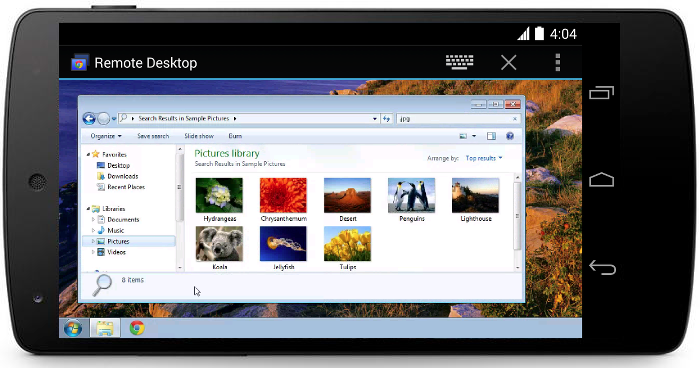
Remotely access other computer or Chromebooks with the help of this smooth-running and easy-to-configure Google Chrome extension
We have all been there, in that situation where a friend, relative, or a loved one requires your “expert” knowledge towards resolving what might turn out to be a very annoying problem with their computer.
Thanks to a broad range of desktop sharing or remote access applications, you can act as a ‘computer super-hero’ lending a helping hand from afar, from the comforts of your own home.
If both you and your friend in need are using Google Chrome on your computers or you are lofty Chromebook users, then the whole remote access procedure might be even simpler than using conventional desktop apps thanks to a Chrome extensions appropriately named, Chrome Remote Desktop.
Easy installation and typical configuration process
As you can imagine, the extension must be installed on both browsers, on both computers. Once installed, the easiest way to launch the extension is from its Chrome Web Store listing, by hitting the “Launch App” button, right after its installation.
You are now required to grant the extension with permission and log in using your Google account. You should be now greeted by Chrome Remote Desktop’s separate main window. The friend in need of assistance should be making its way to the green ‘Share’ button while you are going to be clicking the ‘Access’ button.
Streamlined pairing procedure
It is at this point that both of you will be prompted to download Chrome Remote Desktop Host Installer, a lightweight and simple component used to share your screen activity. The installation process is hardly worth mentioning since it is as streamlined as they get.
Subsequently, you should enter the provided access code from the host computer in the dialog box, and that’s that. From here on, you should be greeted by a new window that displays a live connection with other computer’s desktop.
Remotely lend a helping hand via a smooth-running live desktop feed
You can basically see exactly what your friend is doing or looking at, click on everything and type as well, just like you would do if you were right there next to them. The remote desktop sharing window features an unobtrusive, hamburger-like menu, easily accessible from the upper left corner.
From this menu, you can send ‘CTRL+ALT+DEL’ and ‘PrtScn’ (print screen) commands. You can also take advantage of handy fullscreen and ‘Shrink to fit’ view modes.
Google-vetted remote desktop sharing solutions, for Chromebooks or computers with Chrome
Taking everything into consideration, Chrome Remote Desktop is a useful and lightweight Chrome extension that provides you a quick way to remotely access other computers.
Sure, it may not be the most feature-packed desktop sharing solutions out there, but considering it uses Chrome a platform, it comes with a set of undeniable advantages like silky-smooth live sessions, cross-platform support and Google reliability and security guarantees.
There were an estimated 150 glaciers in Montana’s Glacier National Park in 1910, when President Taft signed into law the bill dedicating the park. Today there are fewer than 30, and those that remain are shrinking.
As global surface temperatures rise, sometimes rapidly, glaciers like those in Glacier National Park are melting and disappearing. The park is in danger of losing its identity as well as its ice, and it may have consequences beyond losing a few photo ops.
Grinnell Glacier
One of the park’s larger glaciers, Grinnell Glacier is one of the most photographed locations in the park. Between 1966 and 2005, Grinnell has lost almost 40 percent of its acreage, which once measure 710 acres. Although glaciers like those in Glacier National Park naturally move through periods of retreat and growth over decades and centuries, scientists say levels of retreat have atypically accelerated since the 1980s.
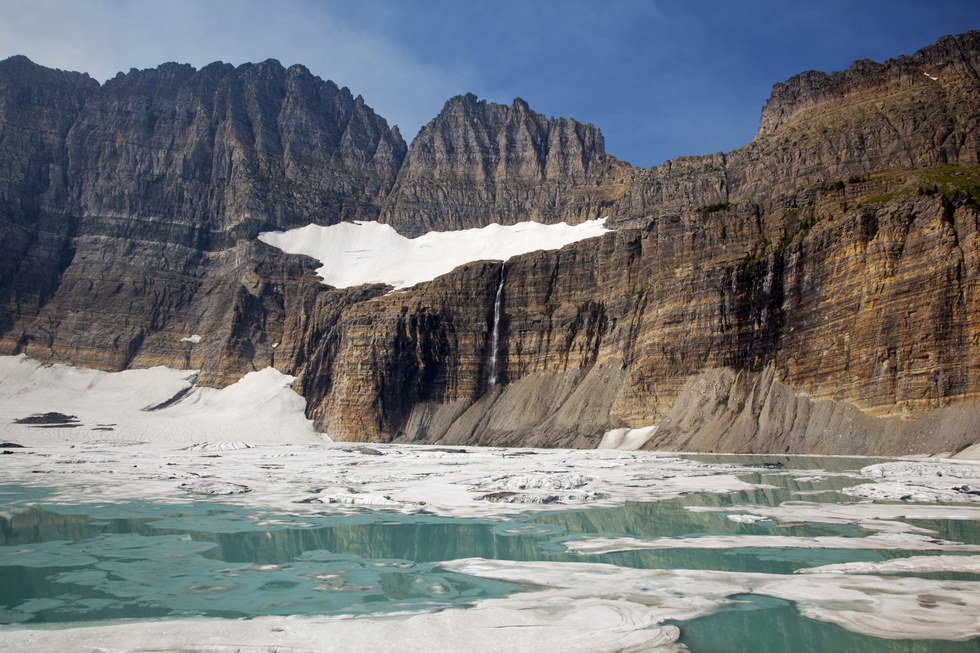
Grinnell Lake
Grinnell Lake is what remains of Grinnell Glacier today, but with the ice that feeds the lake continuing to melt off, even Grinnell’s remnants are in danger.
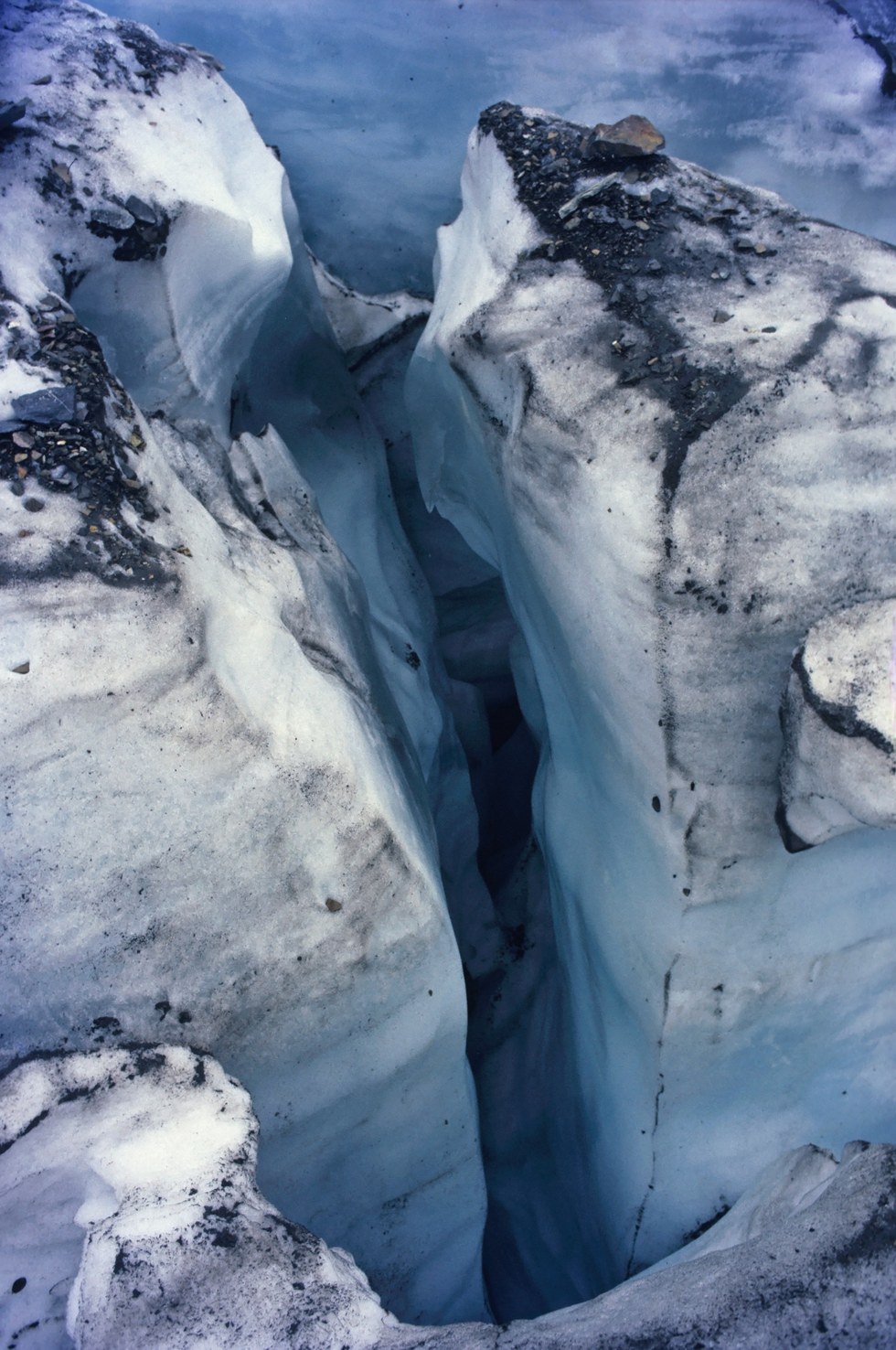
Grinnell Glacier Crevasses
Although it can take centuries for glaciers to form, it doesn’t take very long for them to melt and retreat. As the ice begins to break down, crevasses and pools of melt-water can interact and expose more of the glacier’s surface area to air and water, causing further melting and breakup.
Sperry Glacier And Sea Level
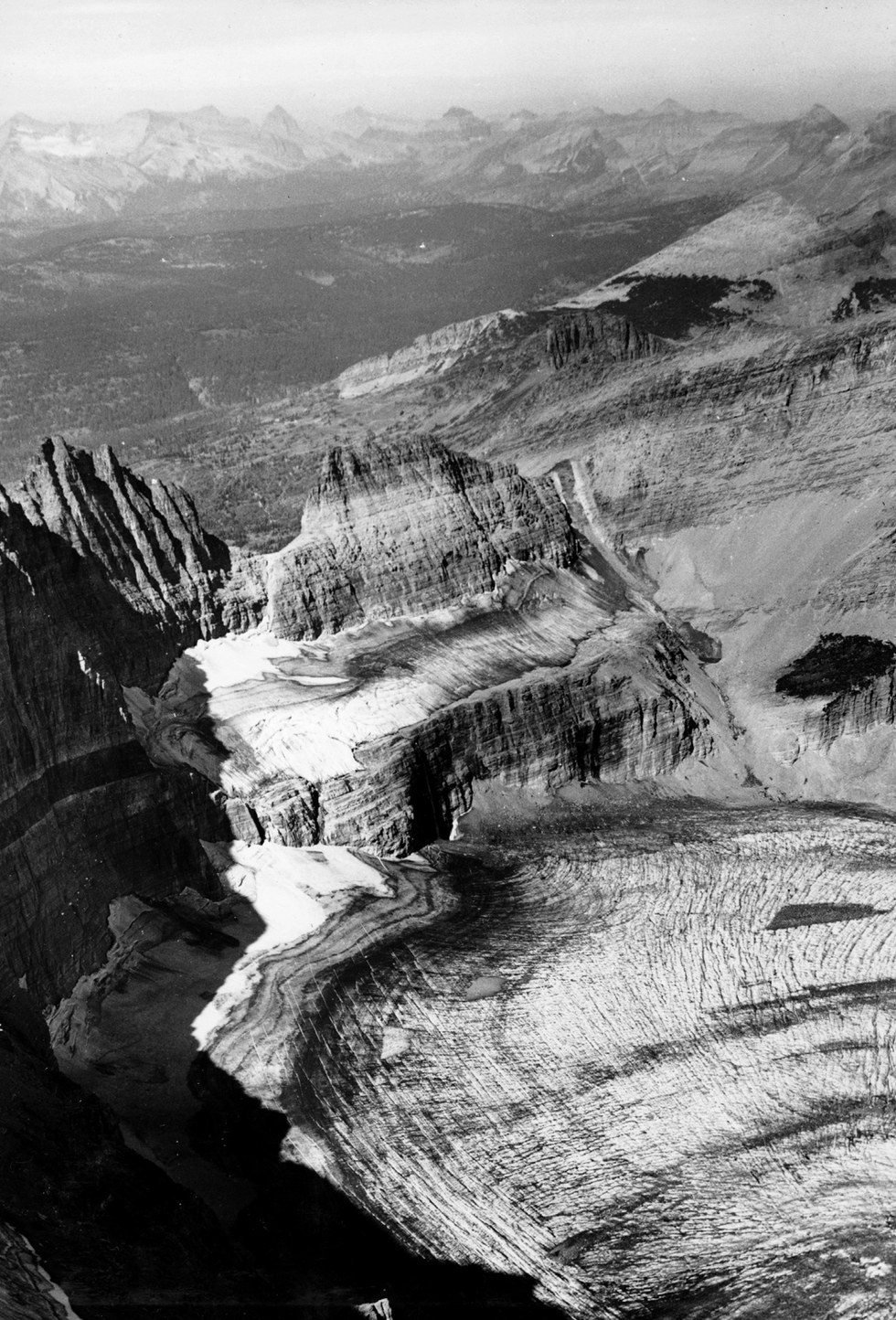
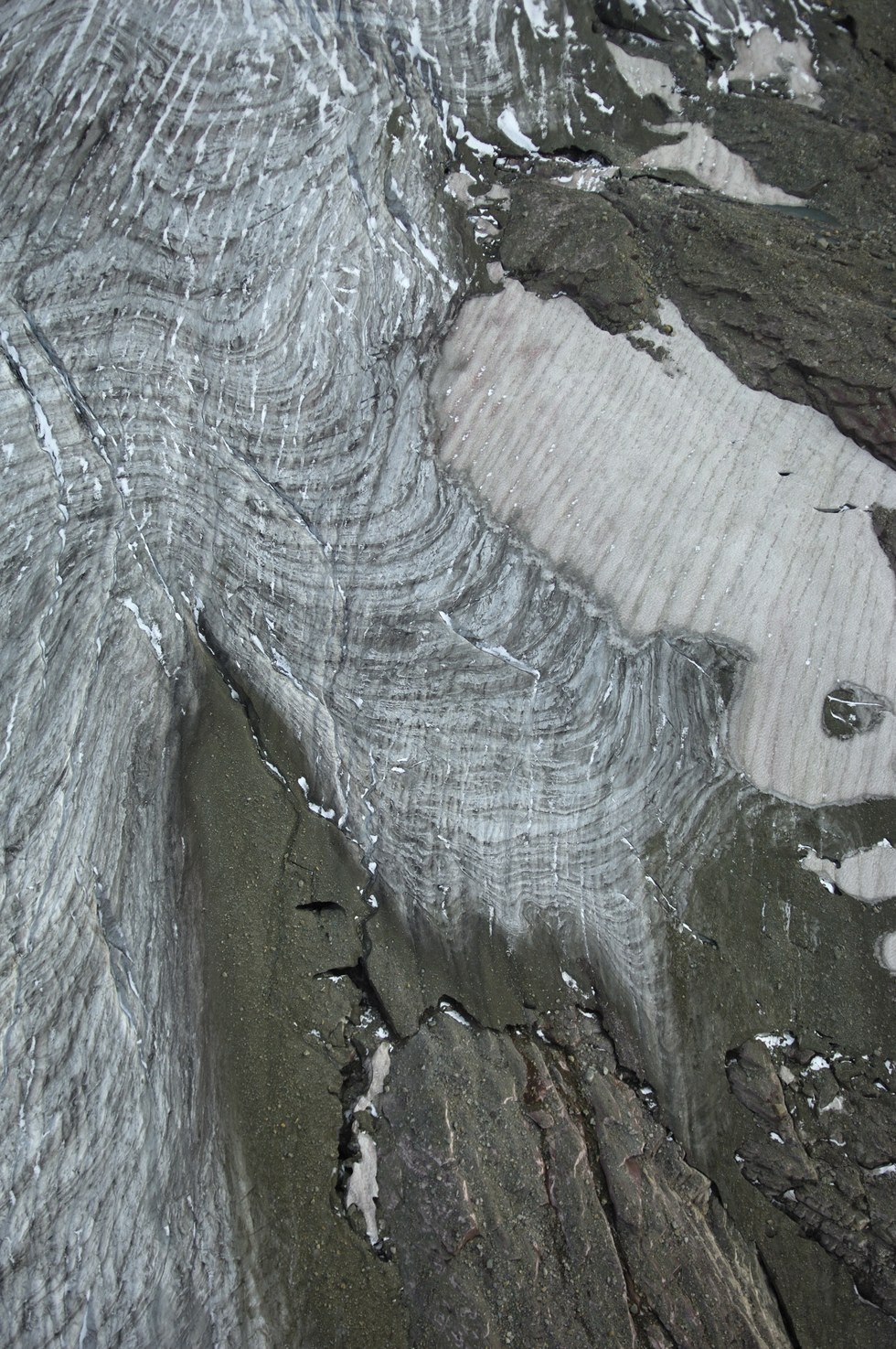
Sperry Glacier, seen from above, is one of the park’s largest glaciers, despite the fact that its surface area has retreated 75 percent since the 19th century, when it measured 930 acres. As glaciers and other surface ice continues to melt, the water eventually makes it to the ocean, contributing to sea level rise. Additionally, the freshwater melt that makes it to the ocean can push down the more dense salt water, which can affect the salinity and heat-transfer properties of ocean currents around the world.
Melting Permafrost
It’s not just the glaciers that are in danger in Glacier National Park, and indeed in all of the Arctic Circle. Permafrost, which is frozen water trapped in the soil, has been melting as well as temperatures rise. This contributes to melt-off of other frozen sources, and has even caused the ground to subside as much as 15 feet in certain regions as melted water gathers together. Permafrost can also contain trapped methane, a potent greenhouse gas that is released directly into the atmosphere when the frost melts, contributing further to warming.
Mountain Snow
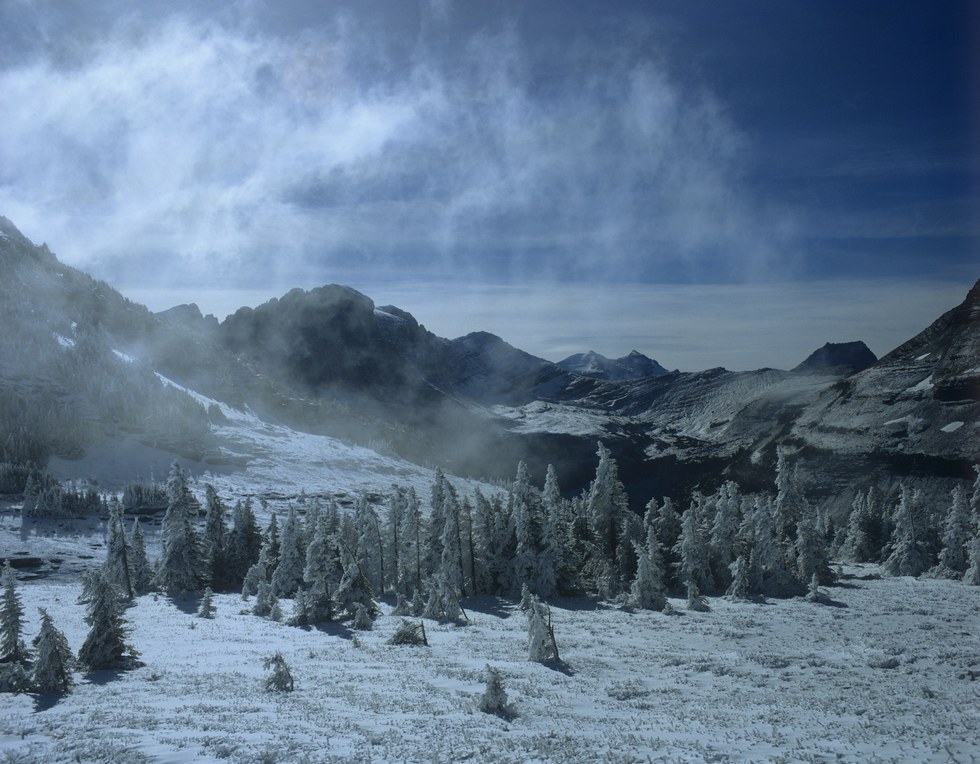
The snow covering those misty peaks may not be as common in the future. With rising temperatures, the first snows of the year start later and later, the first melts start sooner and sooner, and less snow falls overall.
Lakes And Water Reservoirs
With snow seasons becoming shorter and glaciers disappearing, the lakes and natural reservoirs that are fed each year by the melt-off from their frozen sources are starting to dwindle each year. Some mountain towns and major cities rely on snow and glacier melt for up to 80 percent of their water supply. Agricultural officials in some regions worry farms may not be able meet irrigation needs, similar to what is happening now in California’s drought.
Waterfalls
One scenic sight that is sure to disappear in the park with glaciers and snow is the waterfall. Most waterfalls are only active during the seasonal melt, but without anything to fuel the flow, most have slowed to just a trickle.
Eroding Rivers
While the remaining glaciers continue to melt, some rivers have experience a temporary increase in flow levels. This can cause greater erosion than historical levels, which can damage some ecosystems.
Disappearing Fish
S.b. Nace/Lonely Planet/Getty ImagesWith those lakes and streams disappearing with the glaciers that feed them, so will many habitats and breeding grounds for trout and salmon. Fish cannons won’t be able to help in this case, and the changes could have a rippling effect for other species that rely on the fish for food, such as grizzly bears.
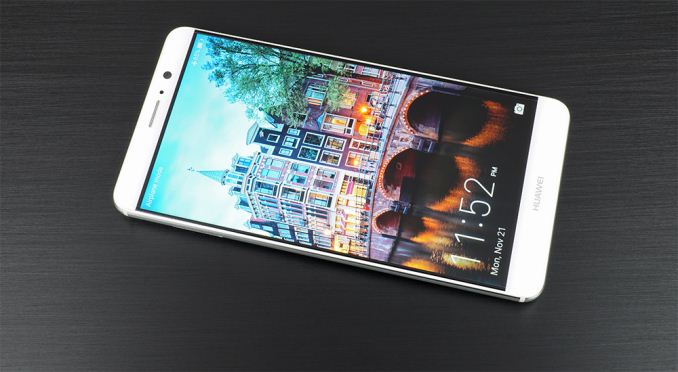
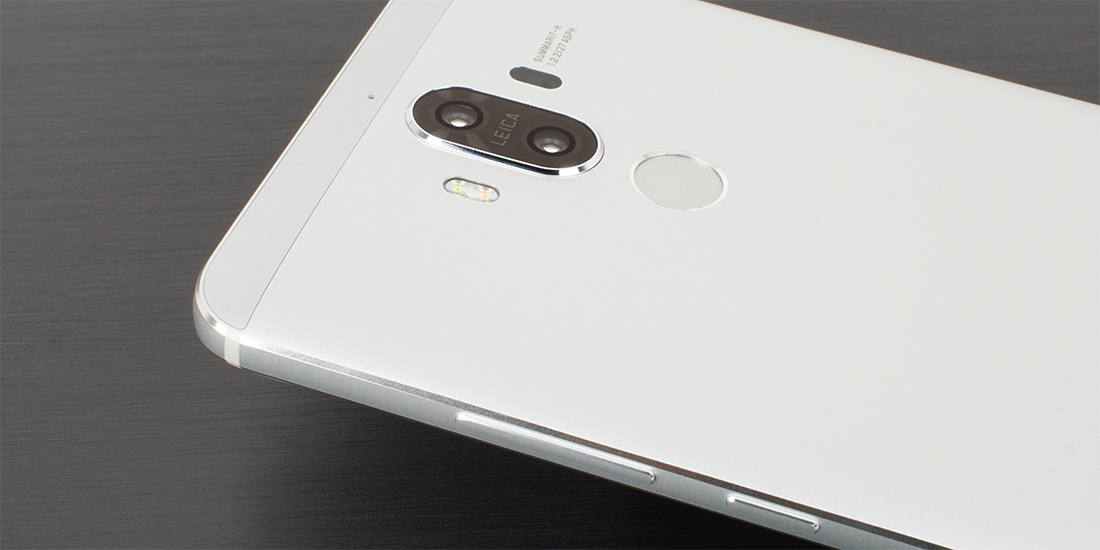
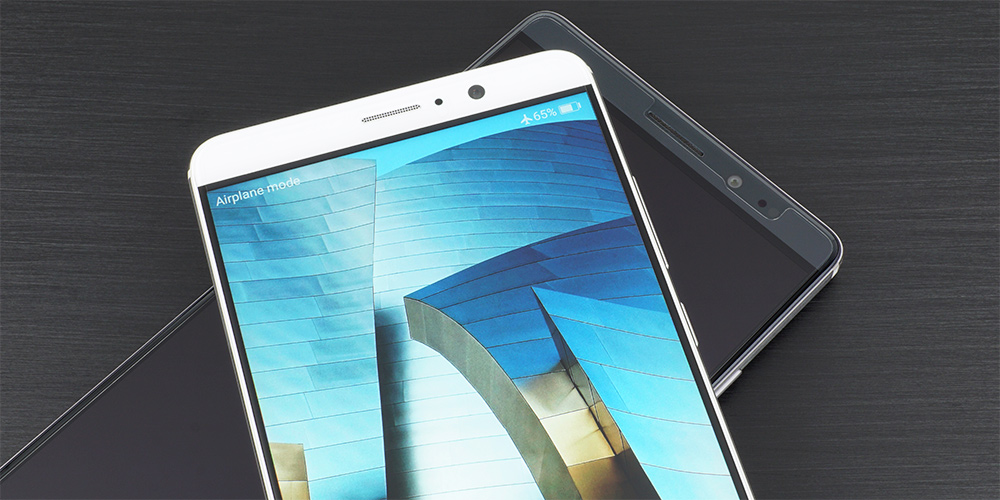
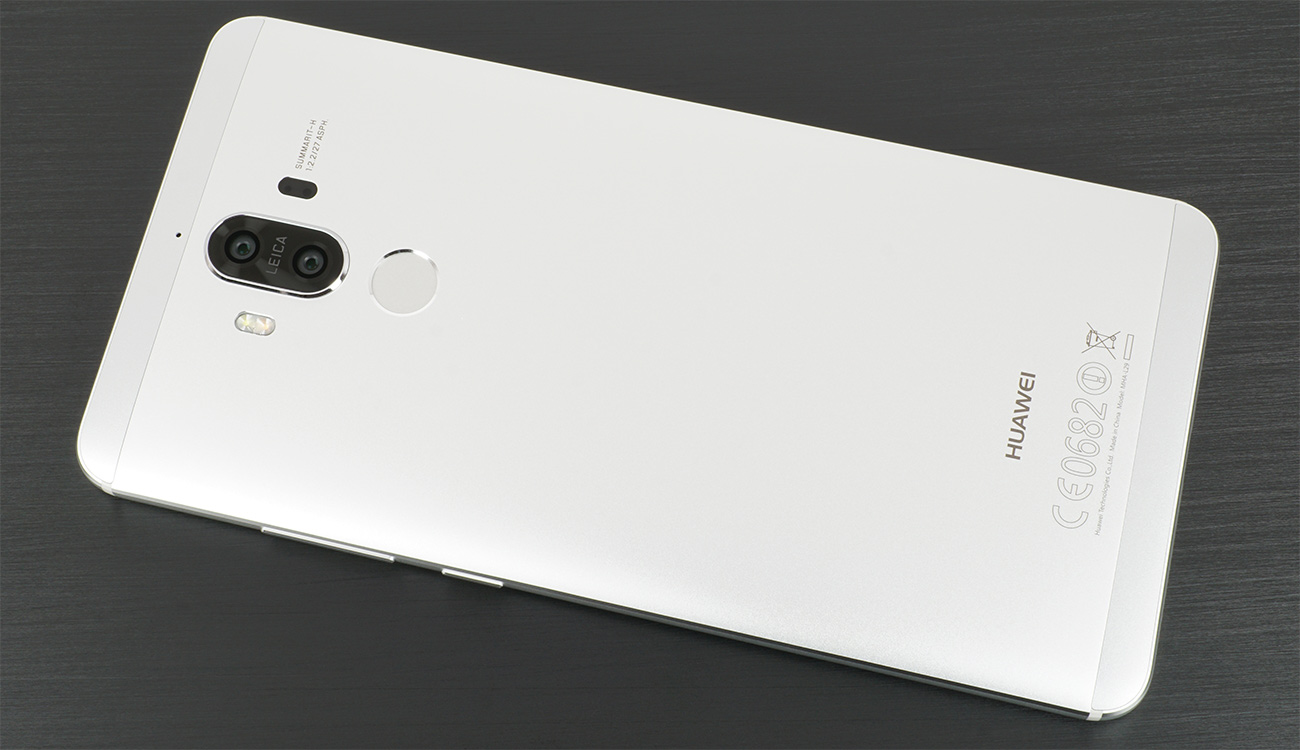
Flagship phones give manufacturers the opportunity to showcase their latest technology, and because they attract attention and generate buzz, they help raise brand awareness. For Huawei, currently the world’s third largest smartphone producer by market share, its Mate series of phones is the pinnacle of what the company has to offer. And while the Mate 9, the successor to the Mate 8 that we looked at in-depth last year, packs some high-end hardware, Huawei recognizes it takes more than an impressive spec sheet to win the premium smartphone battle; it needs to provide an overall experience and image that matches the phone’s premium price.
Performance and responsiveness are important for any phone, but essential for a flagship like the Mate 9. Making its debut inside the Mate 9’s aluminum chassis is HiSilicon’s new Kirin 960 SoC. The four ARM Cortex-A72 CPUs in the Mate 8’s Kirin 950 have been replaced by four of ARM’s latest Cortex-A73 CPUs. The plus-one change in model number is deceptive, however, because there are some significant differences between the two cores. The A73 actually belongs to a different processor family, with its roots going back to the A17 rather than branching out from the A15/A57/A72 family tree. One of the obvious differences between the two different microarchitectures is a reduction in decoder width: The A72 has a 3-wide decoder while the A73 is 2-wide. Despite what appears to be a reduction in capability on paper, ARM claims the A73 still offers better performance and efficiency relative to A72 on the same process and frequency. Four Cortex-A53 cores complete the big.LITTLE CPU configuration.
The Mate 9’s CPU cores reach higher peak frequencies than those in the Mate 8 too, but the differences are small. The A53 cores get a negligible increase from 1.80GHz to 1.84GHz, while the A73 cores reach up to 2.36GHz versus the 2.3GHz for the Kirin 950’s A72 cores. It’s interesting that Kirin 960’s A73 cores are clocked lower than the Kirin 955’s 2.5GHz A72 cores, especially considering that ARM targets a peak frequency of 2.8GHz on 16nm (the Kirin 960 uses TSMC’s 16FFC FinFET process). With the Kirin 960, HiSilicon is more focused on reducing power consumption (and freeing up thermal headroom for the GPU) instead of chasing maximum CPU performance. Still, based on the A73’s other advantages, particularly the improvements to the memory subsystem, the Kirin 960 should still show a small performance gain relative to Kirin 950/955.
Perhaps the biggest criticism of past Kirin SoCs were their seemingly underpowered GPUs. While Qualcomm pushed the performance and power envelope with its Adreno GPUs, and Samsung added eight- or twelve-core configurations of ARM’s latest Mali GPUs to its Exynos SoCs, HiSilicon’s Kirin SoCs made due with more modest four-core Mali configurations. Peak performance significantly trailed its peers, but Kirin’s lower power consumption limited the effects of thermal throttling (a significant problem for the faster GPUs). Ultimately, performance was “good enough” for the majority of cases.
The Mate 9’s Kirin 960 SoC marks a radical shift in HiSilicon’s GPU philosophy. Not only does it utilize ARM’s latest Mali-G71 GPU based on the all-new Bifrost architecture, but it steps up to an eight-core configuration running at an impressive 900MHz—the same peak frequency used by the Kirin 950/955’s much smaller GPU. The combination of additional cores and architectural improvements give the Mate 9 a significant peak performance advantage over the Mate 8’s Mali-T880MP4 GPU, paving the way for new capabilities such as VR.
The Mate 9 pairs its SoC with 4GB of LPDDR4 RAM, which is now standard for flagship phones. Internal storage is limited to 64GB, unlike the Mate 8 that offered a choice between 32GB, 64GB, or 128GB of NAND. Both the Mate 9 Pro (128GB) and Mate 9 Porsche Design (256GB) come with additional storage, and all three Mate 9 versions have a slot for a microSD card to expand storage further.
Software features and configuration are also vitally important to performance. The Mate 9, like previous Huawei phones, includes several enhancements to help apps launch faster and keep the system feeling more responsive. Huawei’s EMUI uses the F2FS filesystem and other optimizations to improve storage performance. There’s also Huawei’s “Machine Learning algorithm” that prioritizes system resources (CPU, memory, and storage) to improve responsiveness and overall performance. This feature, which runs locally on the phone, monitors app usage, taking note of which apps are used at what times, and then anticipates the user’s needs, by preloading the predicted app, for example. Android already manages memory usage, evicting background apps to free up resources for active processes, but Huawei takes this further by closing memory-intensive background apps to ensure memory is available for prioritized apps. It also uses compression to increase the amount of data held in working memory.
Before we discuss the Mate 9’s other hardware and features, let’s briefly cover its connectivity options. It supports 802.11a/b/g/n/ac Wi-Fi (2.4GHz and 5GHz), but only a single spatial stream enabling up to a 433Mbps PHY rate on a 80MHz channel. Most flagship phones (HTC 10, LG G5, Motorola Moto Z / Moto Z Force Droid, Samsung Galaxy S7, and iPhone 7 to name just a few) offer dual spatial stream MU-MIMO, so the Mate 9 is a bit behind here. It does come with Bluetooth 4.2 LE, NFC, and even an IR blaster, though.
The Kirin 960 includes a brand new HiSilicon LTE UE Category 12/13 modem that achieves speeds of up to 600 Mbps on the downlink and 150 Mbps on the uplink (2x20MHz carrier aggregation with 64-QAM). This new modem, which drops HiSilicon’s ‘Balong’ branding, supports up to 8 data streams on the downlink using a combination of quad carrier aggregation (4x CA) and 4×4 MIMO (only for 2x CA). It also supports up to 256-QAM but not on all 8 streams. This gives it some flexibility in how it achieves its maximum throughput: (2x20MHz CA + 4×4 MIMO at 64-QAM) or (4x20MHz CA + 2×2 MIMO at 64-QAM).
This modem gains another new capability: It now supports CDMA, which is important for carrier compatibility in China, and puts HiSilicon in the same group as Intel, MediaTek, and Qualcomm for global network support. This modem represents a significant investment by HiSilicon, because it uses a completely new, custom design that does not use CEVA LTE IP like previous Balong modems.
There are two different models of the Mate 9. The MHA-L09 model uses a single NanoSIM and does not support CDMA networks. The MHA-L29 model supports Dual SIM Dual Standby (DSDS), although one NanoSIM slot is shared with microSD, so it can use either two NanoSIM cards or one NanoSIM and one microSD card. The second SIM supports 2G/3G operation using GSM (850/900/1800/1900MHz), CDMA (BC0), and WCDMA (1/2/4/5/6/8/19).
We use cookies to ensure that we give you the best experience on our website. If you continue to use this site we will assume that you are happy with it.