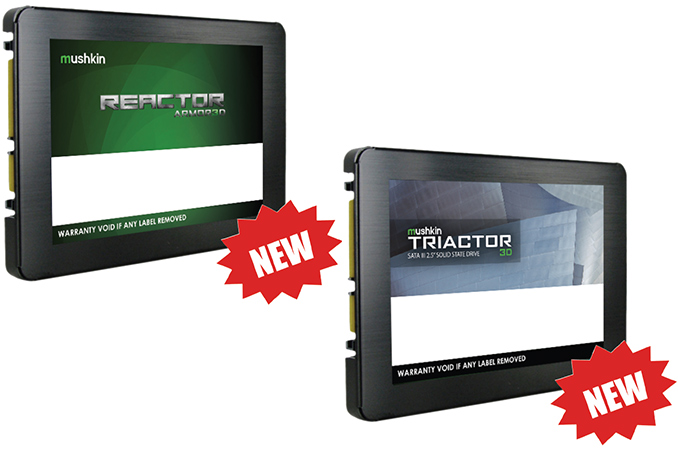
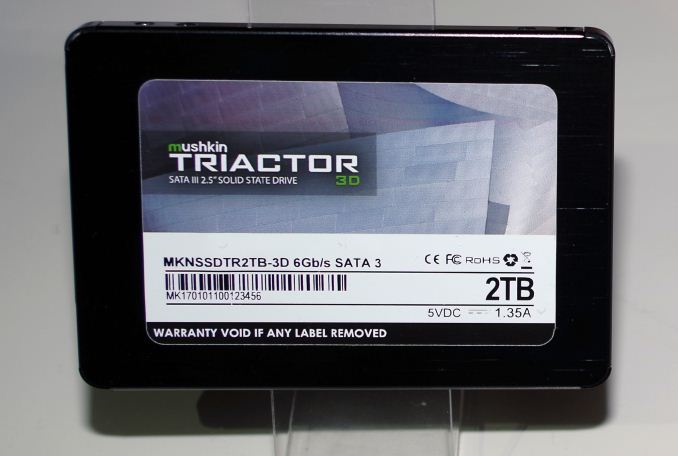
Mushkin at CES demonstrated its new SSDs in 2.5”/7 mm form-factor aimed at mainstream PCs with a SATA interface. The new Reactor Armor 3D and Triactor 3D use 3D NAND flash memory, the same controller from Silicon Motion and offer nearly similar performance. The main difference is that the former use 3D MLC, whereas the latter uses 3D TLC memory.
The NAND flash industry is transitioning to various 3D NAND architectures that enable higher densities, lower per-bit costs and higher endurance compared to planar flash made using very thin process technologies. So far it has not been easy for independent makers of drives to secure a supply of 3D NAND memory because some manufacturers are cutting down the share of produced flash they sell on the open market, whereas 3D NAND from others does not suit SSDs well. In the recent months ADATA was the only independent supplier of drives to offer 3D NAND-based drives, but as we observed at CES, the situation is about to change. Mushkin is another company to announce a lineup of SSDs featuring 3D NAND and targeting different market segments, from entry-level to the high-end. Unlike ADATA, Mushkin is announcing all of its 3D NAND SSDs at once, which implies that the company can get enough chips for different kinds of drives.
Mushkin’s Reactor Armor 3D and Triactor 3D SSDs are based on Silicon Motion’s SM2258 controller, but while the former uses 3D MLC NAND, the latter uses 3D TLC NAND from an undisclosed manufacturer. The SM2258 controller has four NAND flash channels, LDPC ECC technology, a SATA interface, a DRAM buffer support as well as pseudo-SLC (pSLC) caching in order to maximize SSD performance. At present, the SM2258 is virtually the only market-ready third-party SSD controller with that supports 3D NAND (technically speaking, the SM2256 also supports 3D NAND, but drive makers prefer the more advanced controller so to address the higher end of the SSD spectrum), so Mushkin’ s choice is not surprising if the company needs rapid time-to-market (which is also why it does not wait for Phison’s PS5008-E8). What is even more interesting is that Mushkin is considering to add 3D NAND-based drives to the Reactor lineup that uses the SM2246EN controller (this one is qualified for 3D MLC as well). It does not look like the company has made any final decisions, but it is considering such possibility in a bid to continue addressing the entry-level segment with the Reactor lineup.
Mushkin does not disclose the name of its 3D NAND flash supplier, but we have a reason to believe that this is Micron. SanDisk and Toshiba are shipping their 64-layer BiCS NAND inside their removable media products and promise to use this memory for their SSDs. But as of now, 64-layer BiCS chips have not been qualified for SSDs. 3D NAND from SK Hynix is also available for various products, but it has not been qualified for SSDs just yet.
The Reactor Armor 3D SSDs will be available in 240 GB to 1920 GB configurations, whereas the Triactor 3D drives will feature 256 GB to 2 TB capacities. The former family will take advantage of MLC and offer slightly better endurance albeit at a higher price, whereas the latter lineup will be more aggressively priced thanks to cheaper memory. At the same time, it is noteworthy that both product lines include high-capacity (~ 2 TB) drives, an indicator that they target customers who need a lot of non-volatile memory and can pay for that.
As for performance, Mushkin rates sequential read speed of both Reactor Armor 3D and Triactor 3D drives at 565 MB/s, whereas sequential write speed is rated at up to 525 MB/s and 520 MB/s (when pseudo-SLC caching is used) respectively. Random performance of the drives is specified at up to 90,000 read IOPS and up to 85,000 write IOPS.
Mushkin’s Reactor Armor 3D and Triactor 3D SSDs
Capacity
Reactor Armor 3D
Triactor 3D
Capacities
240 GB – 1920 GB
256 GB – 2 TB
Controller
Silicon Motion SM2258
NAND Flash
3D MLC NAND
3D TLC NAND
Sequential Read
Up to 560 MB/s
Sequential Write
Up to 525 MB/s
Up to 520 MB/s
Random Read IOPS
Up to 90K IOPS
Random Write IOPS
Up to 85K IOPS
Pseudo-SLC Caching
Supported
DRAM Buffer
Yes, capacity unknown
TCG Opal Encryption
No
Power Management
DevSleep
Warranty
3 years
MTBF
1,500,000 hours
Mushkin did not announce MSRPs or ETAs for its new Reactor Armor 3D and Triactor 3D drives, but said that they will be covered by its three-year warranty.
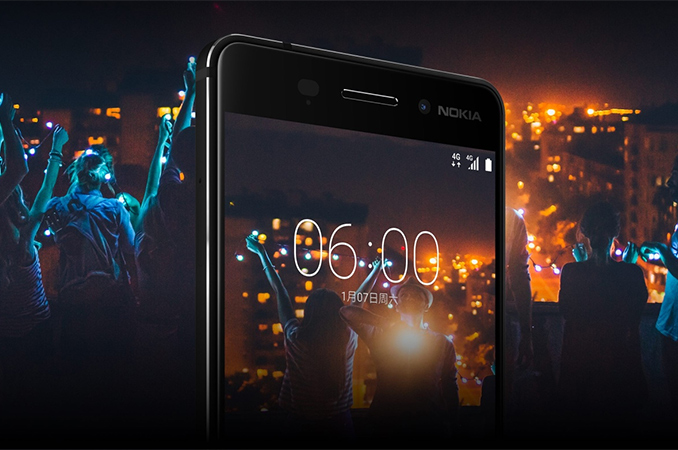
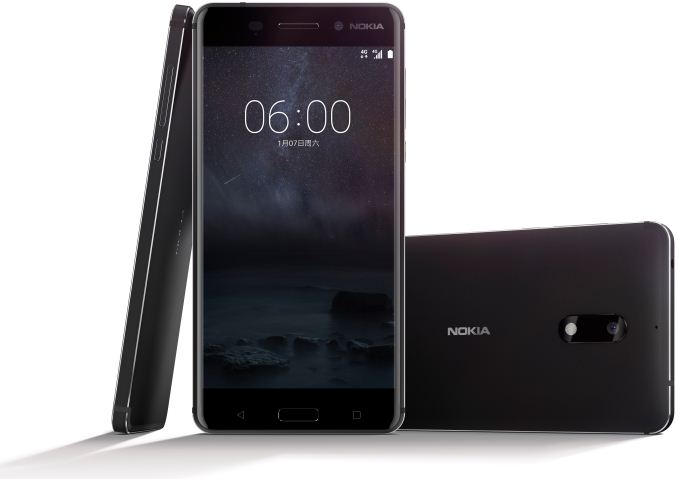
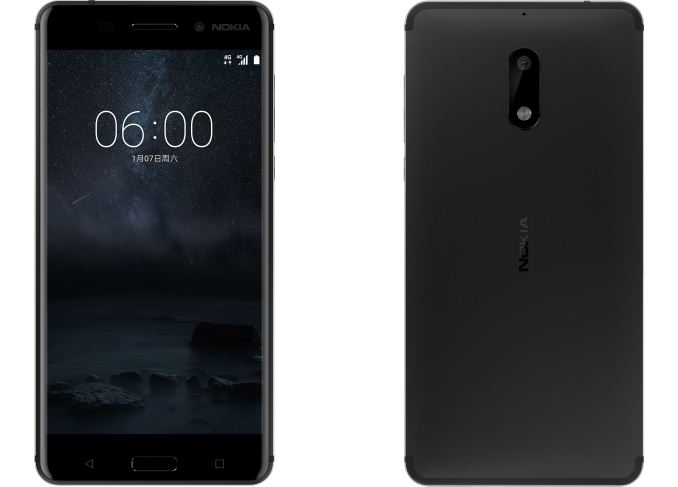
On the day CES 2017 closed its doors, HMD Global introduced its first Nokia-branded smartphone that will be available exclusively in China in the coming weeks. The Nokia 6 handset will feature a 5.5-inch display, a mainstream Qualcomm SoC and will come in an aluminum uni-body. Later on, the company plans to introduce new Nokia smartphones for other regions.
Just in case you were not following Nokia recently, HMD Global (a company established and run mostly by former Nokia executives) and FIH Mobile (a subsidiary of Foxconn) inked several deals with Microsoft and Nokia last year that gives them an ability to develop (under supervision of Nokia), build and sell Nokia-branded smartphones based on the Google Android OS. In particular, HMD obtained exclusive rights to use the Nokia trademark on mobile phones and tablets globally (except Japan) for the next 10 years, standard essential cellular patent licenses, software for feature phones and some other IP. Meanwhile, Foxconn acquired a manufacturing facility in Hanoi, Vietnam, which is used to produce Nokia-branded devices along with customer contracts, critical supply agreements, sales and distribution assets and so on. Under the terms of the agreements, HMD will handle development as well as marketing and will have full operational control of sales and distribution of Nokia-branded mobile phones and tablets (even though formally these assets belong to Foxconn).
The Nokia 6 will be the first smartphone developed by HMD with certain input from Nokia. Despite being the first, the new unit will not be a flagship halo product for the global audience, but a mainstream solution aimed at the world’s largest market (in terms of volume). The move makes sense because HMD needs to earn money and capture market share to ensure long-term success and China is a good place to start.
Inside the Nokia 6 is Qualcomm’s 430 SoC with eight ARM Cortex-A53 general-purpose cores at up to 1.4GHz, an Adreno 505 GPU and an integrated X6 LTE modem. The SoC is accompanies by a generous 4GB of LPDDR3 RAM as well as 64GB of internal NAND flash memory (without further expansion capabilities). The phone has a 5.5-inch FHD IPS display with a polarizer film covered with 2.5D Gorilla Glass for protection. Imaging capabilities of the Nokia 6 include a 16MP sensor with f/2.0 aperture (we do not know whether this one has OIS or other premium features, but most likely it does not) and a dual LED flash on the back as well as an 8MP sensor with f/2.0 aperture on the front. As for audio, the handset has a 3.5-mm TRRS audio jack on top, stereo speakers located on top and bottom edges as well as software support for Dolby Atmos. For local connectivity, the phone uses 802.11ac Wi-Fi, Bluetooth 4.1 and a microUSB port. The smartphone is powered by a 3000mAh battery, but so far HMD has not disclosed details about its battery life and other peculiarities.
Stereo speakers
3.5-mm TRRS audio jack
2x NXP TFA9891 amplifiers (rumoured)
Dolby Atmos support
Dimensions
154 × 75.8 × 7.85 mm (rumoured)
Rear Camera
16MP with f/2.0 aperture and dual LED flash
Front Camera
8MP with f/2.0 aperture
Battery
3000mAh (rumoured)
OS
Android 7
Connectivity
802.11ac Wi-Fi, Bluetooth 4.1, microUSB 2.0
Navigation
GPS, GLONASS
SIM Size
2x NanoSIM
Colors
Black
Launch Country
China
Price
¥1699 ($245)
The Nokia 6 comes in a black 6000-series aluminum uni-body chassis with flat edges that are milled using a CNC machine from a single brick of aluminum. Nokia says that the enclosure is then anodized twice and polished five times. The antenna is separated from the rest of the back cover using polycarbonate strips (a popular method nowadays), but it is hard to tell based on pictures how well the lines match the color and texture of the chassis. Meanwhile, flat edges of the device are polished to prevent them from wearing out, whereas the glass has curved edges to give the phone a smoother feeling during use. Following the latest trends, developers also opted for capacitive touch home, back and recent apps buttons on the Nokia 6. Overall, HMD and Nokia tried to give their mainstream smartphone a premium look and feel. Instead of using polycarbonate, like the Lumia family, it switched to aluminum, which may not be the most durable material, but which at least looks good.
When it comes to the operating system, the Nokia 6 will run Android 7, but it is unclear whether the OS has any enhancements or exclusive features. It is possible that the mainstream smartphone for China will only offer “vanilla” Android, which helps to speed up its time-to-market.
HMD Global will participate in MWC next month and this is where the company is expected to introduce other models in the new lineup of Nokia-branded smartphones. Meanwhile, it is interesting to note that the company announced the first Android-based Nokia smartphone (and, basically, the return of the brand to the smartphone market) a day before the 10th anniversary of Apple’s iPhone announcement.
The Nokia 6 smartphone will be available in the coming weeks in China, exclusively from JD.com for ¥1699 ($245).
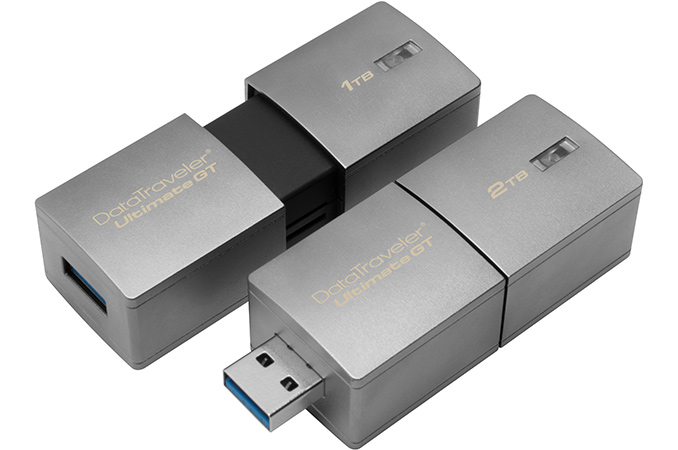
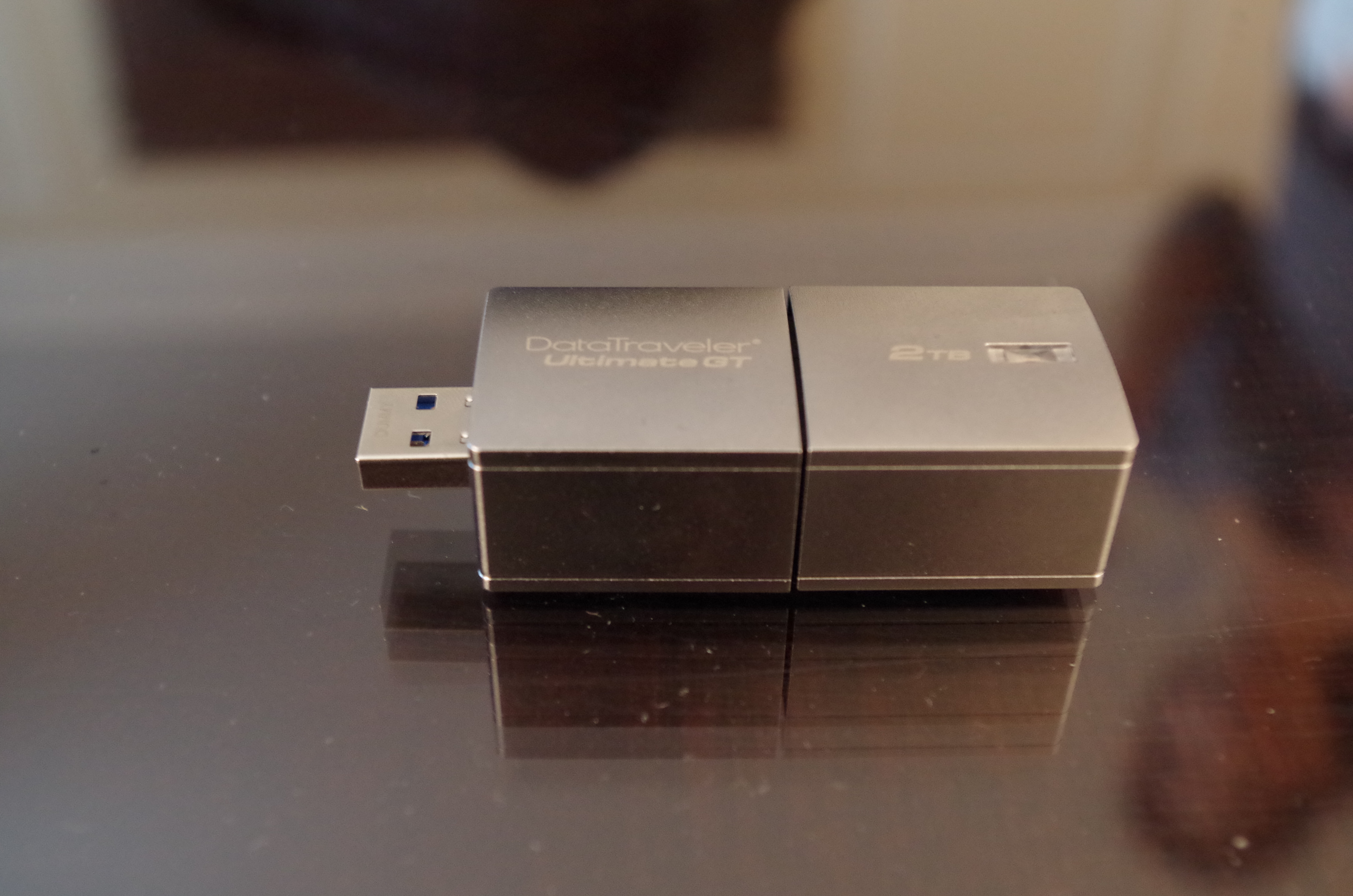
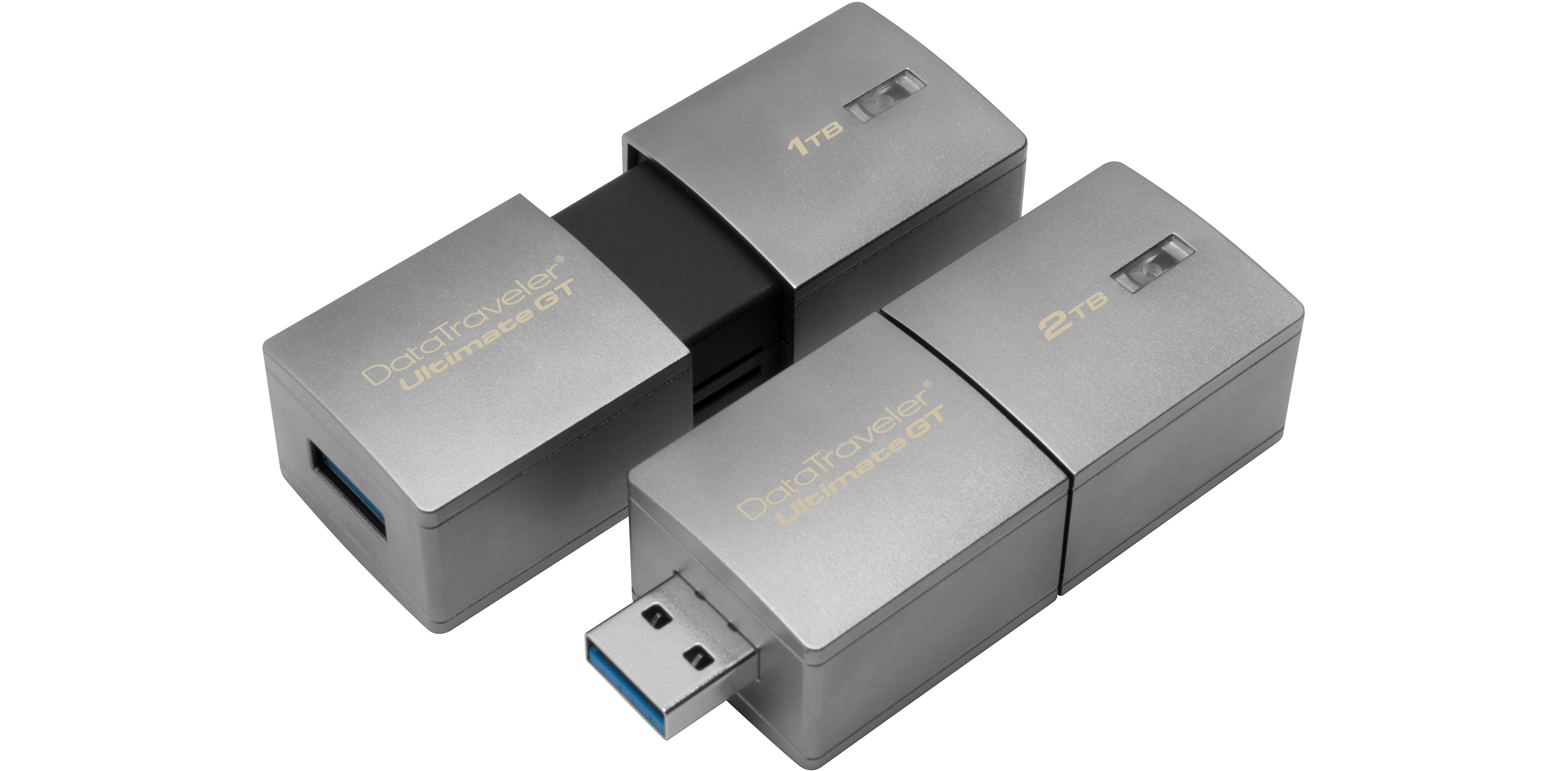
Kingston this week introduced its new DataTraveler Ultimate GT USB flash drive with a re-freshed design and up to 2 TB capacity. The new devices are designed for those who need to store large collections of multimedia files.
The new Kingston DataTraveler Ultimate GT family of flash drives consists of 1 TB and 2 TB models with a USB 3.0 Type-A connector. The drives come in zinc-alloy metal enclosures to protect from physical damage and are relatively compact for their capacities (at least, more compact than external HDDs or SSDs). The new storage devices feature exactly two times higher capacity than their predecessors, the Kingston DataTraveler HyperX Predator 3.0 (512 GB and 1 TB) drives, introduced four years ago at CES 2013. What is unclear is whether they beat their ancestors in terms of performance (up to 240 MB/s read and 160 MB/s write), but keep in mind that the real-world transfer rate of the USB 3.0 interface is around 400 MB/s at best.
Kingston DataTraveler Ultimate GT Family of Flash Drives
DTUGT/1TB
DTUGT/2TB
Capacity
1 TB
2 TB
Type of NAND
Unknown
Maximum Transfer Rate
5 Gbps
Dimensions
72mm × 26.94mm × 21mm
Operating Temperature
-25°C to 60°C
Storage Temperature
-40°C to 85°C
Warranty
Five Years
The DataTraveler Ultimate GT USB flash drives will be primarily useful for people who need to carry large amounts of data, but not necessarily edit it. For example, photographers, construction workers or scientists may offload images/videos/documents from their notebooks to such drives just for backup reasons. In fact, keeping in mind that many of such folks may work in harsh environments, the DataTraveler Ultimate GT drives are rated to support extended storage and operating temperature ranges: they can be stored at -40°C and operate at -25°C (-20°C and 0°C for typical USB drives).
Kingston will start to ship the new DataTraveler Ultimate GT USB flash drives in February and the storage devices will be covered with the company’s five-year warranty. The drives will work with any modern Microsoft Windows OS that supports such flash drives (Windows 7 SP1 and later), Apple MacOS (10.9.x and later), Linux (2.6.x and later) as well as Google’s Chrome OS. As for pricing the DataTraveler Ultimate GT USB flash drives are expected to have a price premium given their positioning. For example, the DataTraveler HyperX Predator 1 TB still costs well over $1000 at retailers like Amazon and Newegg.
It will also come with a carry pouch and a USB cable to alleviate issues where it interferes with other ports:
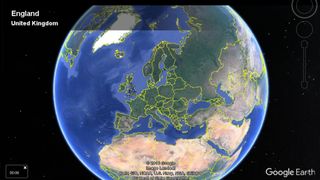
Google Earth’s name is a little misleading these days, because in addition to modelling the entire world, it also enables you to explore bits of the moon and Mars.
It’s an astonishing technological feat, and its uses are almost endless: you can use it to explore far-flung places or see the ocean floor; you can see the effects of natural disasters or use it to identify places to visit when you’re travelling somewhere; you can use it as an educational tool or just load up on Sunny Delight, sit really close to the screen and imagine you can fly.
Maybe that last one is just us.
Why you need it
If you have children it’s a must-have app: it’s widely used in education and the ability to access all kinds of data and swoop and soar around the planet is just as exciting today as when we first experienced it just over a decade ago (and it’s much more realistic).
And if you don’t have children it’s just as useful: you can watch real-time traffic flows and explore the potential effects of earthquakes, see entire cities in 3D and virtually visit places like Mount Everest. How amazing is that?
Tesla completed its $2.6 billion acquisition of Solar City this week, and, to celebrate, the company has announced a major solar energy project: wiring up the whole island of Ta’u in American Samoa. Previously, the island ran on diesel generators, but over the past year Tesla has installed a micro grid of solar energy panels and batteries that will supply “nearly 100 percent” of power needs for Ta’u’s 600 residents.
The project seems intended to show off the potential benefits of the Solar City acquisition, with Ta’u’s micro grid comprised of 5,328 solar panels from Solar City and Tesla, along with 60 Tesla Power packs batteries for storage. But buying Solar City remains a risky move for Tesla, with the purchase including billions of dollars of debt for a company that’s far from profitable (Solar City spends $6 for every $1 it makes in sales). Nevertheless, Tesla CEO Elon Musk describes the acquisition as “blindingly obvious” — a necessary step in his so-called “Master Plan” to integrate clean energy generation and storage.
The project in Ta’u shows the benefit of this. It was funded by American Samoan and US authorities (including the Department of Interior), and Tesla says it will offset the island’s use of more than 109,500 gallons of diesel per year, as well as the expense of shipping that fuel in. (That’s the amount of fuel used by one generator; the island has three of these in case one breaks, but most of the time only one is in use.) “Factoring in the escalating cost of fuel, along with transporting such mass quantities to the small island, the financial impact is substantial,” said Tesla in a blog post.
The micro grid will allow the island to stay fully powered for three days without sunlight, and its capacity will recharge fully in seven hours. Local businesses, along with essential services like the hospital, police, and fire stations, will all use solar power “This project will help lessen the carbon footprint of the world,” local resident Keith Ah soon said in a Tesla blog post. “Living on an island, you experience global warming firsthand. Beach erosions and other noticeable changes are a part of life here. It’s a serious problem, and this project will hopefully set a good example for everyone else to follow.”
idia’s Shield line of devices is now more than six years old, and the latest member of the family is the new Shield TV, an update of Nvidia’s first set-top streaming box from 2015. The 2017 version slims down the console to a remarkably portable rectangle, adds a redesigned controller with a built-in ambient microphone, and includes a more traditional wand-like remote in the box.
The $199 device (or $299 for a larger version with a built-in 500GB hard drive) has big ambitions: Nvidia wants Shield TV to be not only the only streaming TV box you need, but also a gaming console, a smart home device and a personal digital assistant all in one. Yet it’s also virtually unchanged in terms of internal hardware from what Nvidia first released in 2015. Software makes it feel like a completely new device, however – and that’s going to benefit both existing users and those new to the Shield platform.
Android at heart
Under the hood powering Shield’s operating system is Android TV, in perhaps its most successful iteration. The new Shield brings an Android TV 5.0 upgrade, along with Android 7.0 Nougat, which Nvidia has used to improve its own custom navigation interface. There’s a much less confusing games section that groups all content under one broad “Games” category, for instance, which replaces the Shield Hub app.
More generally enjoyable additions with this software update include the ability to adopt external storage as native, which means you can plug in external flash drives via the two USB ports on the back and have those act as fully accessible storage space for games and media. This means buying the entry-level $199 model makes a lot more sense; if you ever find you need more space, it’s a fairly easy and inexpensive upgrade to pick up a high-capacity 128GB flash drive, like the one included in the review kit sent by Nvidia for testing. That’s a big advantage over other streaming devices like Apple TV, too, which have hard limits on internal storage capacity.
Other improvements with the software update include a built-in Amazon Video app which allows you to stream content, and access Prime Video if you’re a member. This also provides access to 4K HDR Prime video content, which is a significant upgrade for those who have the requisite TV or display hardware.
Android TV still also offers a wealth of media apps from the Play Store, meaning you’ll likely be able to find what you’re looking for in a streaming service provider. If you haven’t looked at Android TV since its launch, there’s a lot on offer now, and cord cutters are unlikely to feel a content pinch.
Voice control and cross-service search means you can press the mic button on your controller and use voice queries to find content across Google Play Movies, Hulu, YouTube, Plex and more, you can search once and find anywhere – even in your existing media library via Plex, which is again not something you’ll find with Apple TV.
Gaming grows up
On the new Nvidia Shield, the company has changed the way it serves up games with an eye to creating a device that’s truly capable of replacing your home consoles and gaming PCs. It does this with changes and improvements to both GameStream the service Nvidia offers to stream games locally from your Nvidia-powered gaming PCs, and GeForce Now, the $7.99 per month subscription game streaming service that runs titles on Nvidia’s own servers but lets you play them as if they were being run locally.
The updates to GameStream mean you can now stream at up to 4K HDR resolution, providing the game supports both, and you’ll also get haptic feedback to the new controller from the game. It is indeed a much-improved experience, and one that basically means your gaming PC can follow you around the house wherever you happen to have a display and the desire to play.
GeForce Now’s upgrades, however, are the really big deal here. The new backed means that games are running on servers with Pascal-powered graphics output, with either GTX 1070 or 1080 GPU power behind them. The quality is amazing, and combined with a 4K display, will beat just about anything you can get from your home console, as I verified playing titles like The Witcher 3 and Homefront, as well as The Division and Far Cry Primal, titles now available through Nvidia’s new day-and-date release partnership with Ubisoft to put all their games on GeForce Now.
I tested GeForce Now in a variety of conditions, using both wired and wireless connections. A wired Ethernet connection direct to my home modem worked best, with a connection that effectively gets about 6 Mbps consistently at max speeds. Using this set up, I could not tell that I was playing the game remotely. With a wireless connection, there were some tiny hiccups, but the experience was still very playable, and graphics still exceeded what I can get out of PS4 and Xbox One locally.
Brand new games still cost a lot (what you’d expect to pay for new releases), on top of the GeForce Now subscription, but the subscription comes with a decent back catalog included, and you don’t need to buy or maintain expensive PC equipment. It’s probably the defining factor of why you’d want a Shield instead of anything else right now, and it’s a powerful motivator for anyone interested in gaming – and even some who aren’t. My dad, who hasn’t played a video game since Super Mario Bros. 3 on original Nintendo, got caught up in Far Cry Primal and now is considering a shield for his next streaming device.
Home hub
A lot of what the Shield brings to the table is still in hibernation – Nvidia has teamed up with both Google Assistant and SmartThings to turn the console into a full-fledged Amazon Echo competitor. The SmartThings integration will let users turn it into a smart home control hub for an additional $25 when it arrives, providing control over connected lights, appliances and more. The Assistant integration, also coming later on, will enable the ambient microphone in the Shield controller and let you use “Ok Google” commands to control smart home, check weather and more.
Nvidia’s also bringing something called the Nvidia Spot to market later on, which are plug-in microphones you can spread across your house to issue voice commands to your Shield and Assistant from wherever you happen to be. These connect over Wi-Fi and will retail for around $50 apiece.
The fact that these features aren’t yet available is a bit of a problem, but not as much as you might think. Nvidia’s pricing for the Shield is the same as it has been, starting at $199, and there are other improvements beyond the availability of Assistant. These latent feature promises just mean that the Shield’s value proposition will only increase over time. Think about it this way: it’s like buying an Apple TV now, and getting a Google Home pushed to your device later as a free over-the-air software update.
Made for 4K HDR fanatics
The other big reason to pick up a Shield over other streamers is its extensive 4K and HDR support. I actually picked up an LG 4K HDR LED television in part because I wanted to see what the Shield was truly capable of, in fact. The results were indeed impressive, and made one thing very clear: If you’re looking for 4K HDR content, this is the best streaming device you can get.
It includes Amazon Video 4K HDR streaming, including Prime shows like The Grand Tour, out of the box. Even Amazon’s own Fire TV devices don’t offer HDR from Amazon Prime. It also has 4K HDR for Netflix, 4K YouTube and 4K for Google Play Movies. Games streamed from your local PCs can access 4K resolution, too.
Basically if 4K HDR is a priority, this is the way to go. Nvidia takes graphics to heart, and it shows on the new Shield.
Bottom Line
Maybe the most impressive thing about the new Shield is that you don’t actually have to buy one to experience the new features; all of the software updates described above, including 4K HDR and streaming improvements, are available to existing Shield TV device owners via a software update just pushed out on Monday. If you pick up one of the new, redesigned Shield controllers for $59.99, which will be used for the ambient Google Assistant features later on, you’ve got the new console (minus the slim new design).
Nvidia says it left the Tegra X1 processor and other internal components the same because it was already 3x more powerful than the competition in areas where it counts, and the price maintenance means new Shield buyers are basically getting everything they would’ve gotten before, plus the Shield Remote in the box.
If you’re looking for a device that can replace as many of your home theater components as possible, the Shield TV is it. Support for live TV via USB tuners with the new Live Channels app means if you have an antenna, it’s also everything you need for getting and navigating traditional over-the-air TV, too. Some companies try to be everything and end up compromising all experiences, but Nvidia’s Shield TV is a true all-in-one that suits the needs of most people.
We use cookies to ensure that we give you the best experience on our website. If you continue to use this site we will assume that you are happy with it.